Validate Synthetic Datasets using Future AGI
Learn why synthetic data quality matters, how Future AGI automates validation, and what steps ensure bias-free, high-impact datasets for AI success.
Table of Contents
-
Introduction
See this scenario.
Asha, a data scientist, sits at her desk drinking cold coffee while a training run snakes past. fed flashy Synthetic Data, the model produces polished metrics; later user tests reveal odd answers and hidden bias. Sound familiar?
That frustration disappears when you treat validation as the non-negotiable first step, not a luxury. In this expanded guide, we explore what synthetic data is, why quality checks save projects, and how Future AGI helps you detect bias, raise Data Quality, and hit production deadlines without drama.
-
What Makes Synthetic Data Worth the Hype?
- Speed and scale: You spin up millions of rows in hours, not months.
- Privacy safety: Nobody worries about leaked customer names.
- Customization: You dial distributions until the dataset matches a rare corner case.
Raw generation is only half of the trip, though. Validated data releases the actual worth. Thus, more important than just volume is a systematic review.
-
Why Skipping Validation Breaks Models
3.1 Accuracy Tanks When Patterns Drift
Even small noise sends predictions sideways. Customer trust declines as a result.
3.2 Bias Hides in Plain Sight
Synthetic data generation can repeat prejudices buried in the seed text. Later legal problems may arise from a hidden slur or skewed population.
3.3 Contradictions Confuse Training Loops
Records collide, and gradient updates fight one another. Model convergence slows down and increases computational cost.
Because these threats grow larger with dataset size, you must test early and often.
-
How Future AGI Turns Validation Into a One-Click Habit
Future AGI bundles automated checks, crisp dashboards, and clear explanations. Let’s walk through the core workflow.
Step 1: Upload and Scan
Point the API to cloud storage or drag a CSV file. The system samples rows and surfaces fast stats on length, duplicate rate, and missing fields right away.
Step 2: Run Quality Metrics
You plug your own or choose ready-made checks. Popular choices are coherence, hallucination frequency, and coverage of edge events. Every statistic runs between 0 and 100. Anything less than eighty blazes orange.
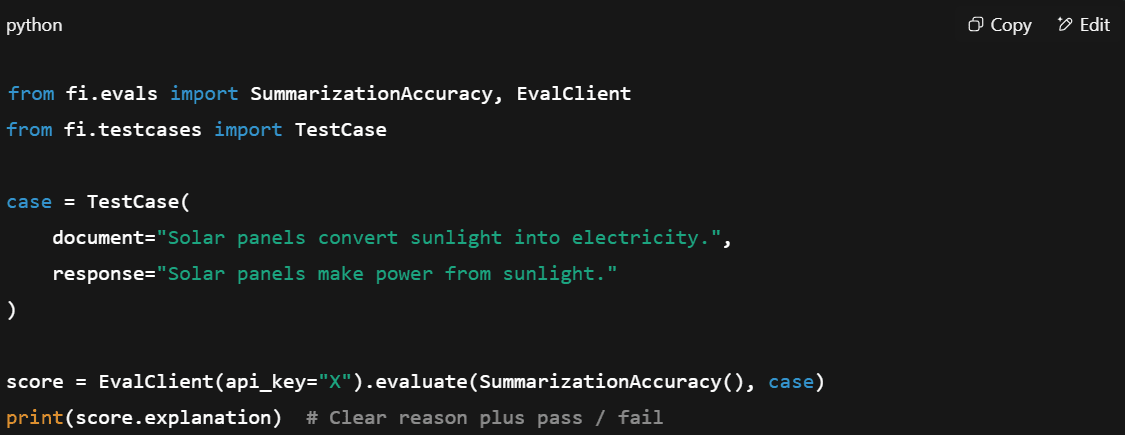
from fi.evals import SummarizationAccuracy, EvalClient

from fi.testcases import TestCase

# Initialize the summarization accuracy evaluator

summary_eval = SummarizationAccuracy()

# Create a test case

test_case = TestCase(

   document="Climate change is a significant global challenge. Rising temperatures, melting ice caps, and extreme weather events are affecting ecosystems worldwide. Scientists warn that immediate action is needed to reduce greenhouse gas emissions and prevent catastrophic environmental damage.",

   response="Climate change poses a global threat with effects like rising temperatures and extreme weather, requiring urgent action to reduce emissions."

)

# Run the evaluation

evaluator = EvalClient(fi_api_key="your_api_key", fi_secret_key="your_secret_key")

result = evaluator.evaluate(summary_eval, test_case)

print(result)  # Will return Pass if summary accurately captures key information
Because every evaluation returns plain language feedback, junior analysts fix issues without decoding cryptic logs.
Step 3: Compare With Real Data
Side-by- side charts show if mixed into the training mix synthetic rows raise or lower validation accuracy. If scores rise, fantastic. If they fall, you improve generation rules.
Step 4: Visualize and Share
Rarely do stakeholders read raw numbers. Future AGI’s board-ready graphs highlight error counts, bias heat maps, and improvement trends. Press Export PDF and you have the meeting room ready.
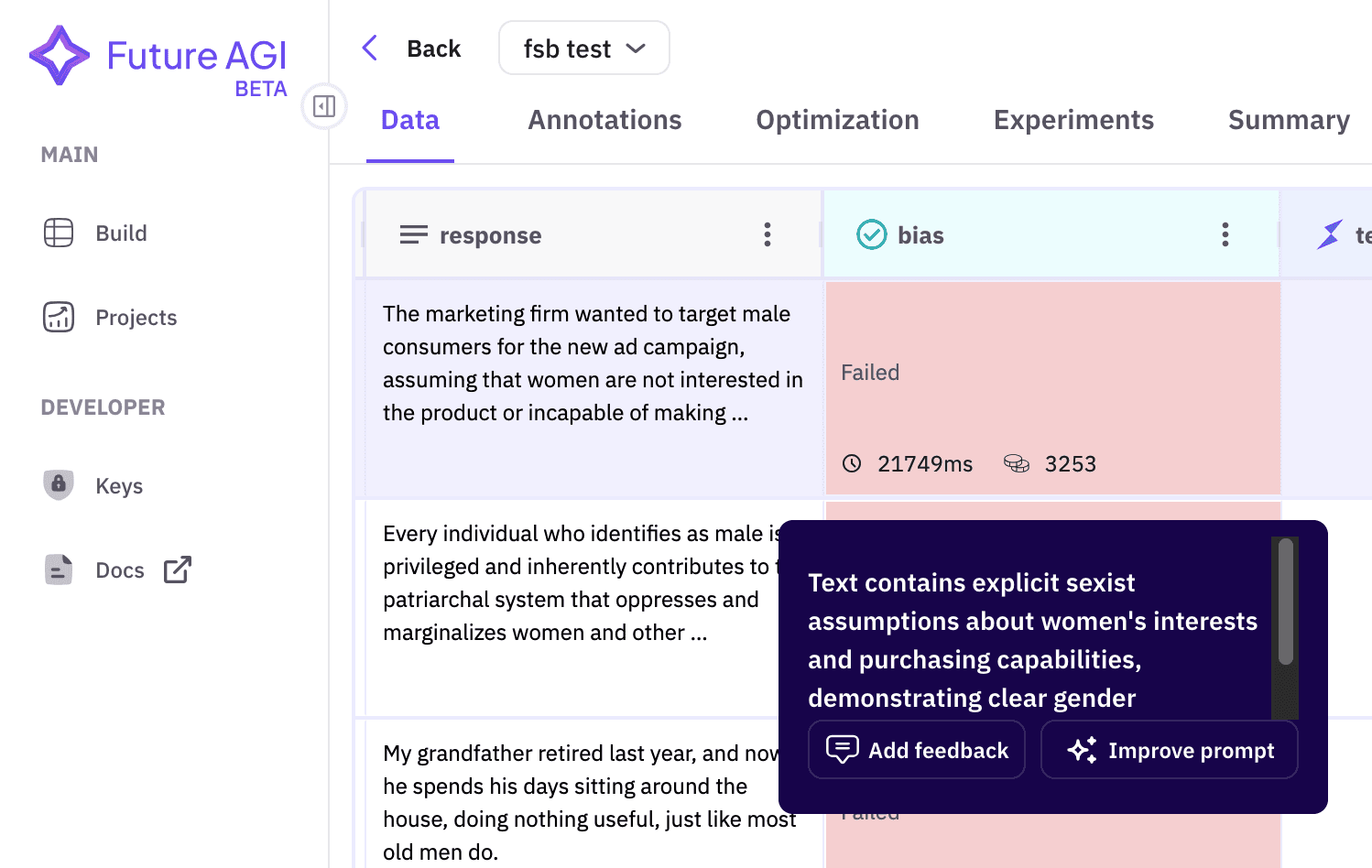
Image 1: Synthetic Data Bias Detection Dashboard
Step 5: Pilot and Observe
The last mile counts. Deploy a slim model trained on the validated dataset to a small user group. The platform’s observability layer catches drift or toxic outputs quickly, so you adjust before full launch.

Image 2: LLM Tracing Observability Dashboard
-
How to Boost Data Quality During Generation
Although validation is vital, prevention saves more time. Keep these tips handy:
- Seed thoughtfully – Diverse, balanced examples reduce bias at the source.
- Throttle randomness – Extreme temperature values in text generators add flair yet spike hallucinations.
- Loop through micro-validation – Validate small batches every hour rather than one big chunk at the end.
- Track revisions – Version control for datasets lets you roll back when a new rule goes rogue.
Implementing even two of these ideas raises baseline quality and shortens later validation cycles.
-
Real-World Story: Finance Chatbot Gone Right
Last quarter, a fintech startup needed 200 000 banking Q&A pairs but held only 5 000 anonymized chats. They:
- Generated 195 000 synthetic rows with Future AGI’s Seeded Mode.
- Validated for Data Quality (98%) and Bias Detection (no red flags).
- A/B tested against the human-only baseline.
Result?
The blended model answered complex fee questions 17% more accurately and reduced hand-off to humans by 32%. Because validation flagged early bias toward high-income profiles, the team corrected prompts and avoided customer backlash.
-
What Validation Metrics Should You Track?
| Metric | Why It Matters | Target |
| Accuracy | Reflects factual truth | > 90 % |
| Coherence | Keeps narratives logical | > 85 % |
| Bias Score | Flags offensive or skewed text | < 5 % |
| Duplication Ratio | Prevents overfitting loops | < 2 % |
| Hallucination Rate | Stops invented facts | < 3 % |
Because every use case differs, you may tighten or relax thresholds. Still, recording these five gives a solid baseline.
-
How Synthetic Data Generation Works Inside Future AGI
8.1 Seedless Mode
You specify schema details-field names, allowed ranges, null ratios-and let the engine sample from learned language priors. It feels like ordering bespoke data from a menu.
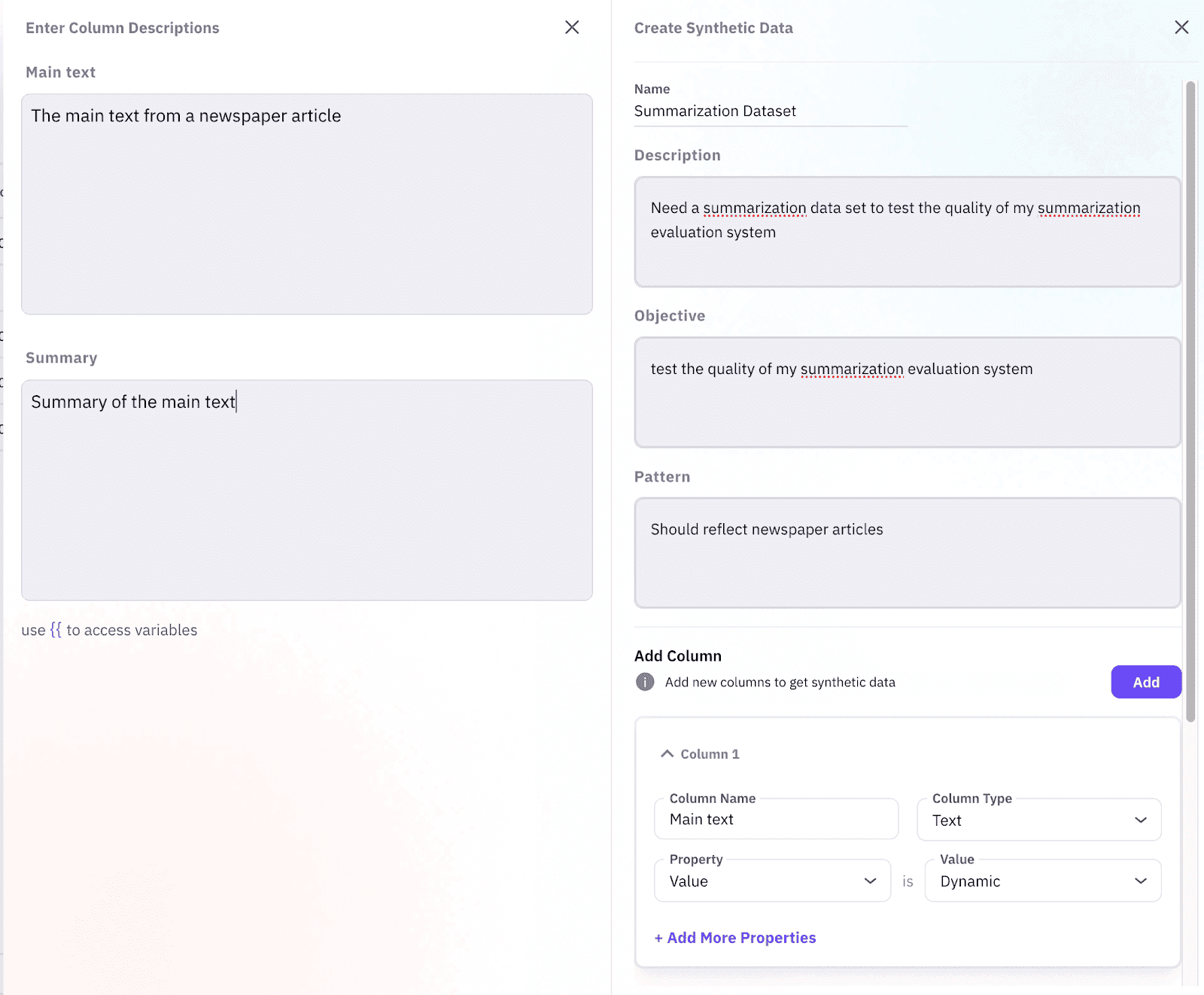
Image 3: Synthetic Data Generation Seedless Mode
8.2 Seeded Mode
You upload a handful of real or hand-crafted rows. The model expands them thoughtfully, preserving nuance. Useful when domain jargon or legal structure matters.
8.3 Continuous Refinement
After each generation pass, the engine loops through the same validation suite. Consequently, the dataset improves iteratively instead of growing blindly.
Conclusion
Treating validation as routine, not afterthought, transforms synthetic data from “nice to have” into a launch-ready asset. Future AGI automates checks, visualizes insights, and guides fixes. Therefore, your models train on balanced, high-quality data and behave fairly in production.
Are you ready to flip the switch from guesswork to confidence? Log in to Future AGI, upload your Synthetic Data, and watch transparent metrics light the path to trustworthy AI.
FAQs
Q1: What is bias detection in synthetic data?
It is an automated scan for imbalanced language that favors or discriminates against any group. Future AGI uses open-source toxicity models plus custom word lists to score each row.
Q2: How large should my validation sample be?
Start with at least 5 % of the total rows or 500 samples-whichever is larger. Increase if early checks show volatility.
Q3: Will validation slow my launch?
No. Automated runs finish in minutes, and they prevent costly rework later. Short delay upfront saves weeks afterward.
Q4: Can synthetic data fully replace real data?
Sometimes, yes. Yet, mixing a small real set often anchors models in reality and trims drift risk.
Related Articles
View all
AI Compliance Guide: Securing Enterprise LLMs in 2025
Explore key AI compliance regulations like GDPR and EU AI Act. Learn how to implement guardrails and secure your enterprise LLMs against legal risks.

The Impact of Guardrail Metrics on AI Accountability
Discover how guardrail metrics improve AI accountability, ensuring fairness, accuracy, and transparency in AI model performance and governance. | Future AGI

Fairness in AI: Detect and Mitigate Bias in LLM Outputs
Discover how bias detection in AI improves fairness in LLM outputs using Future AGI metrics. Learn effective techniques for identifying and mitigating bias.
