Is Loop Engineering Real, or Just Another AI Buzzword?
An honest look at the loop engineering debate: the real case that it's a genuinely new practice, the real case that it's renamed orchestration, and a clear verdict.
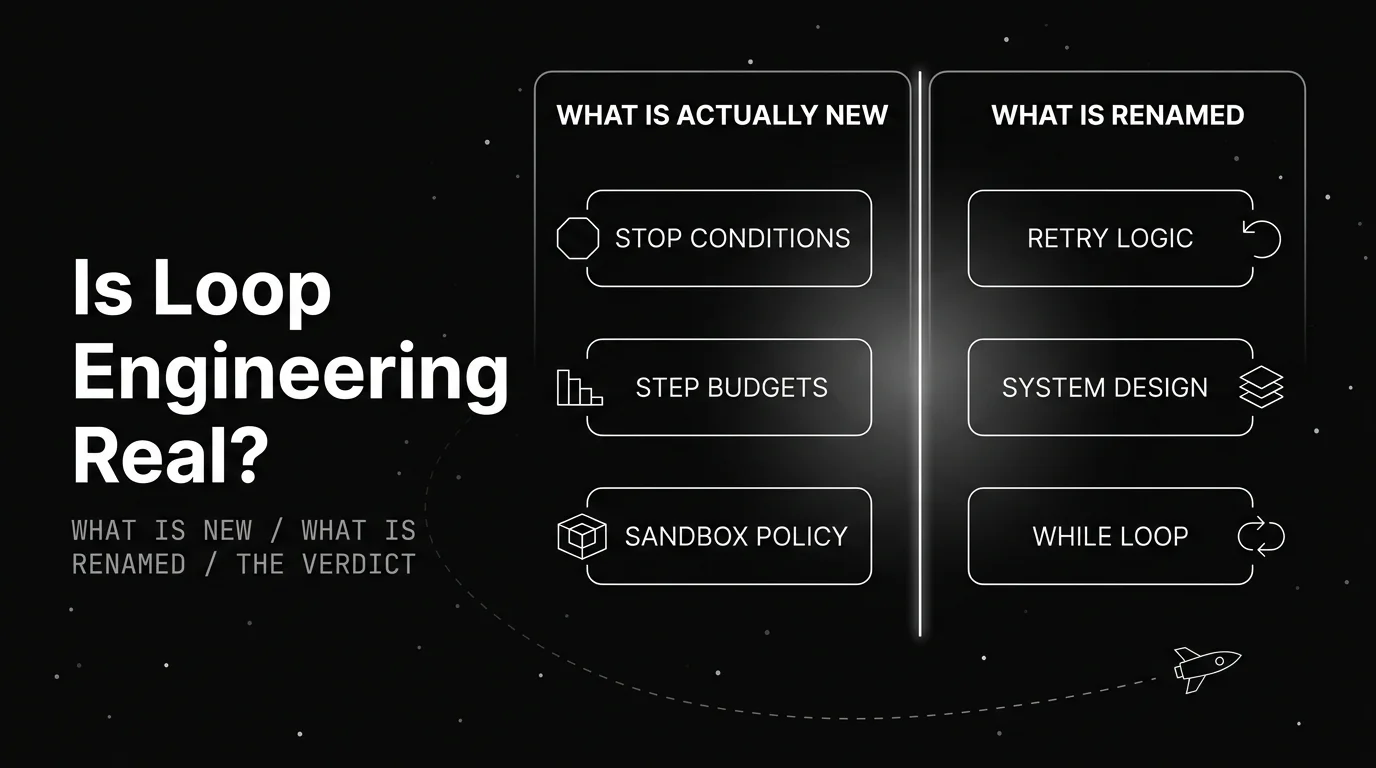
Table of Contents
Someone drops “loop engineering” into your team’s chat, and within a day three people are arguing about it. One says it is the biggest shift in how they work with agents all year. Another says it is a retry loop with a new name.
That argument is the reason to write this post honestly instead of picking a side to sell something. Loop engineering has real defenders and real skeptics, and both groups include people who actually build with agents daily, not just commentators. The honest answer turns out to be less exciting than either camp wants, and more useful for deciding whether the term is worth your attention.
TL;DR: Loop engineering names a real, specific bundle of practice, worktrees, stop conditions, verification steps, wrapped around a genuinely old mechanism: a loop that calls a model and checks a condition. The name earns its place by bundling new tooling, not by inventing a new kind of control flow.
What people are actually asking
When someone asks “is loop engineering real,” they rarely mean “does the code run.” A loop that calls a model, checks the result, and repeats obviously runs. That part was never in dispute.
The real question is narrower: does this deserve a name and a body of practice, or is it marketing wrapped around something engineers already knew how to do. That is a fair question, and it deserves a straight answer instead of a shrug.
This post takes the question at face value. Not “is looping possible,” but “does the specific bundle people call loop engineering describe something new enough to be worth learning.”
If you want the full definition first, including the five pieces that make up a working loop, that groundwork is covered in a dedicated explainer elsewhere in this series. Here, the focus stays on the argument itself, and on what the evidence for each side actually shows.
Where the term came from, in one line
Developer Addy Osmani named the practice in a June 2026 essay on his own blog, later syndicated by O’Reilly Radar. His definition: loop engineering means designing the system that prompts your agent, instead of prompting it by hand, running a recursive goal until it is complete.
That single essay is the spark for nearly every argument that follows, on both sides. The idea did not stay contained to one blog post.
Developer Peter Steinberger compressed it into one widely shared line the same week: stop prompting coding agents, start designing loops that prompt them for you. Boris Cherny, who built Claude Code, has described his own work in similar terms in public comments, saying he no longer prompts Claude directly and instead writes the loops that prompt it for him.
That is three separately named people converging on the same framing. The backlash followed close behind.
The case that it’s genuinely new
The strongest argument for “genuinely new” is not the control-flow idea itself. It is what has become cheap enough to put inside the loop. Isolated worktrees, sub-agents that check work instead of grading their own, and tool access through connector protocols are all recent, concrete infrastructure.
None of them existed in an easy, standard form when the first autonomous-agent scripts showed up in 2023. The pieces Osmani names as parts of a working loop, external state that survives between runs, skill files that hold project knowledge, are genuinely newer than the loop concept underneath them.
That is also a different craft than prompt engineering, which is about getting the wording of one request right. Loop engineering is about the system deciding what the next request even is.
Boris Cherny’s own description backs the “new” case from inside a shipping product. He reportedly said on a podcast that writing loops instead of prompts became his actual day-to-day job, not a marketing line from someone with a course to sell.
The case that it’s a rebrand
The strongest argument for “renamed” starts with the mechanism: a loop that calls a model, checks a condition, and repeats is not new. It predates the term by years, arguably by decades if you count any retry-until-done pattern in software.
Reason-and-act style agents that interleave thinking with tool calls were already a named, published pattern before “loop engineering” existed, covered in more depth in a separate look at named agent architecture patterns. Autonomous coding-agent scripts that looped until a goal was met were widely circulated by 2023.
The Register made a sharper version of this argument in a June 2026 piece, arguing loop engineering is largely a buzzword. Its case: more agent usage benefits the AI vendors selling the tokens. That does not make the practice fake, but it is a reason to be skeptical of the volume of promotion behind it.
Even Osmani’s own essay undercuts the strongest version of the “new paradigm” claim. His actual conclusion: “The loop changes the work, it does not delete you from it.” That reads like someone naming a pattern, not announcing a discovery, and it is a notably modest line from the person who named the practice.
What the actual debate looked like
The argument did not stay confined to one blog post and one rebuttal. It played out across several separate venues within the same few weeks.
A Hacker News thread built around Osmani’s original essay raised a specific, practical worry: can a developer stay accountable for a codebase they did not write turn by turn.
A separate Hacker News thread, built around a related essay on agentic loops, raised a more grounded point, that specifying what you actually want still takes real time, so the promised time savings shrink once planning is counted.
Developer communities on Reddit asked a blunter version of the same question directly, in threads framed close to “is this real or just a buzzword.” The record confirms that debate happened and was genuinely split. It does not support quoting specific comments, since direct access to those threads was not available while researching this piece.
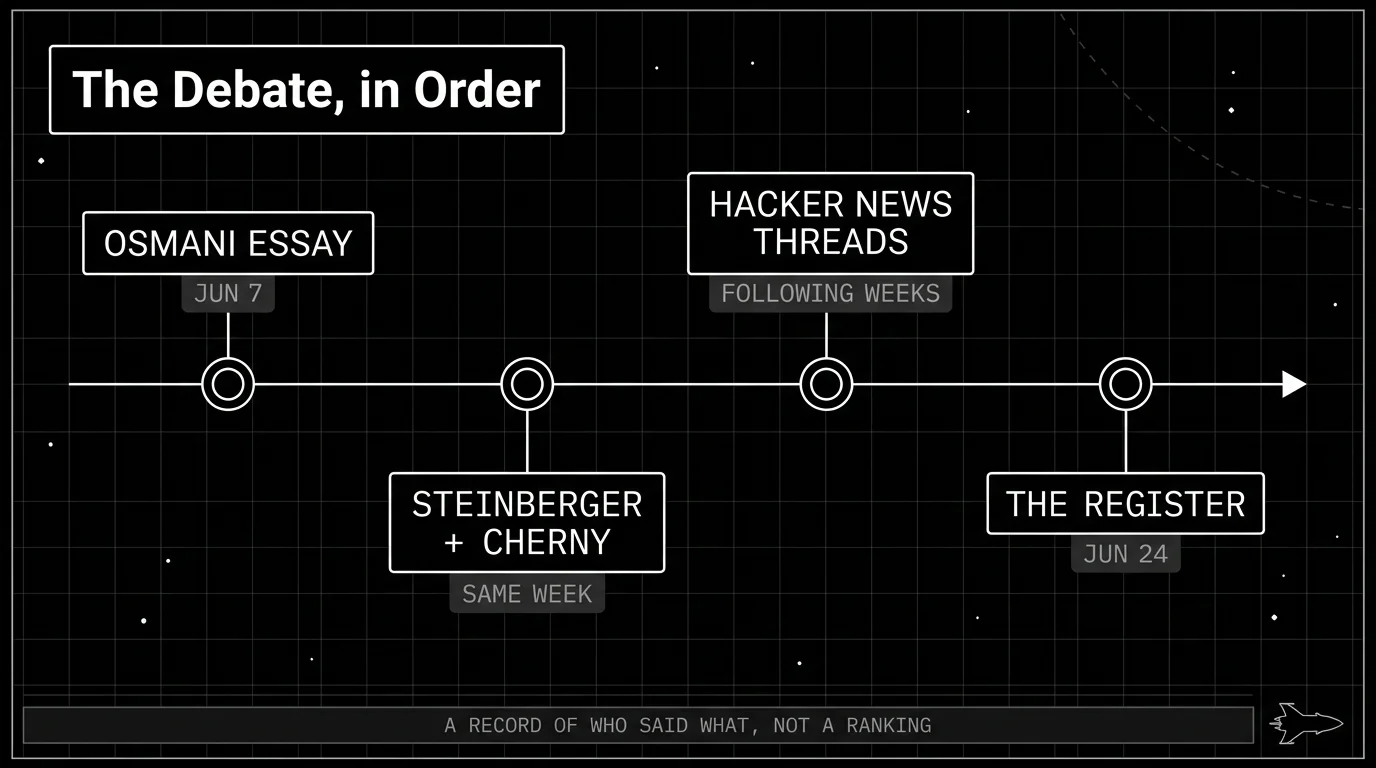
| When (June 2026) | What happened | The core objection or claim |
|---|---|---|
| June 7 | Osmani publishes the original essay | Loop engineering replaces manual, turn-by-turn prompting |
| Same week | Steinberger compresses the idea into one widely shared line | A real, felt shift in daily practice, not just a label |
| Date not established | Cherny describes his own workflow in similar terms | Loops, not prompts, as the day-to-day interface |
| Following weeks | Hacker News threads discuss the essay and a related one | Comprehension, accountability, and the real time cost of specifying what you want |
| June 24 | The Register publishes a buzzword critique | Naming benefits vendors; humans remain essential |
The table above is a record of who said what, roughly in order, not a ranking. It lets you trace the argument to its actual sources instead of a summary of a summary.
The verdict, scored
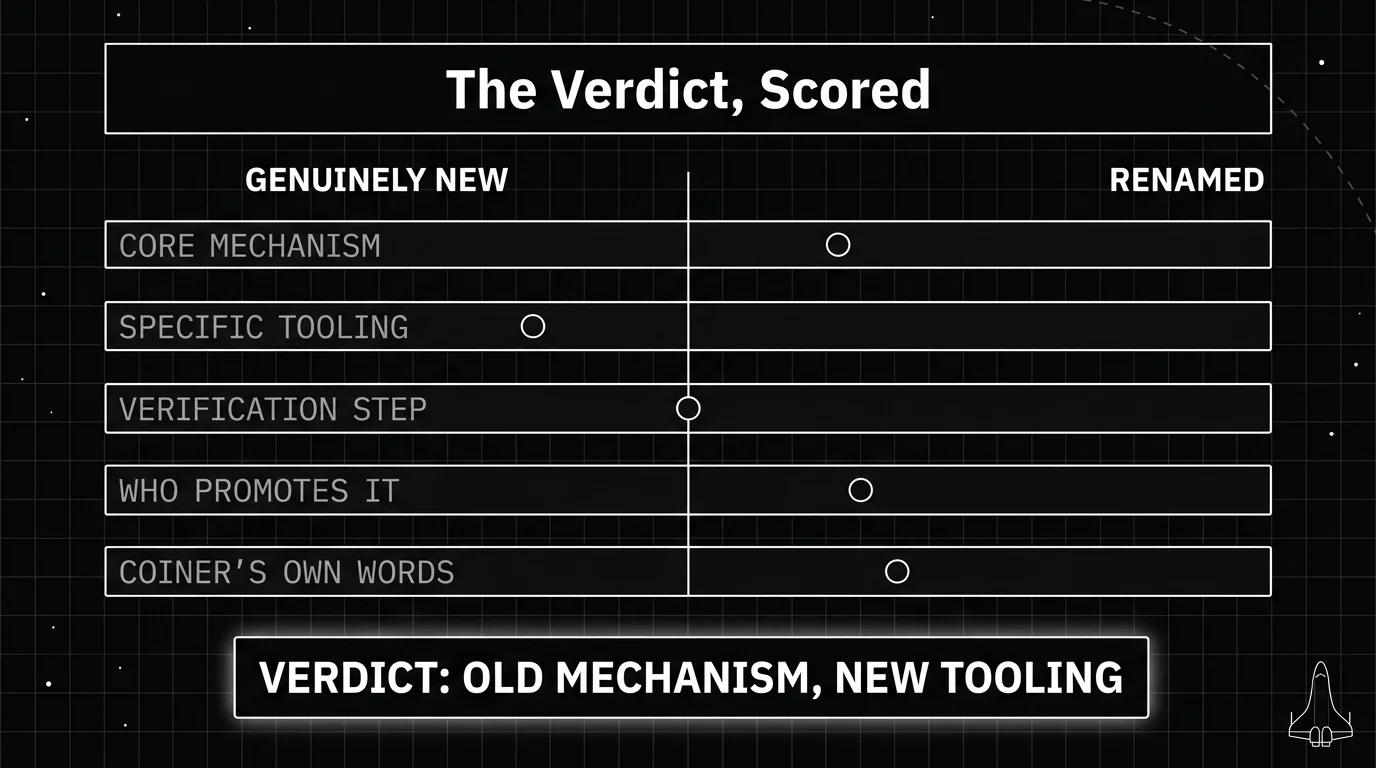
Instead of leaving this as an open argument, here is a plain scorecard: what each side actually gets right, one row at a time.
| Signal | Points to “genuinely new” | Points to “renamed” |
|---|---|---|
| The core mechanism (call model, check, repeat) | No, this predates the term | Yes, a decades-old pattern |
| The specific tooling (worktrees, sub-agents, connectors) | Yes, recently practical at low cost | No, this is the new part, not the old one |
| Verification as a named, required step | Partly, made more explicit and structured | Partly, “add a check” is not new either |
| Who is promoting it loudest | Weak signal, both camps overlap | Vendors benefit from more agent usage either way |
| The coiner’s own conclusion | Weak signal for “new paradigm” | Osmani himself says the human role does not disappear |
Three of five rows lean toward “renamed mechanism, newly practical tooling.” That is a specific verdict, not a shrug.
The one row that clearly leans new, plus a split row, are not nothing, though. The tooling row points at things you can actually build with rather than branding, and the verification row splits because making the check an explicit, required step is a real discipline even though checks themselves are old. That is the part worth learning even if you stop using the term “loop engineering” a year from now.
So, is loop engineering real?
Here is the direct answer instead of another “it depends.” The control-flow idea inside loop engineering is not new, and treating it as a discovery oversells it. The tooling and discipline now wrapped around that old idea are new enough, and specific enough, to deserve a name.
That makes “renamed” technically correct about the mechanism and “buzzword” unfair about the practice. A buzzword describes nothing specific. Loop engineering, as Osmani actually defined it, describes nameable pieces you can check for in a real system: worktrees, stop conditions, a verification step, external state.
So: real, in the sense that it names a genuine, learnable practice bundling new tooling around an old idea. Not real, in the sense of a scientific breakthrough or a new category of software. Picking only one half of that sentence, and defending it loudly, is where most of the public argument about this term goes wrong.
Should you actually learn it
The debate above is worth knowing, but it is not the question that matters most for your own work. The better question is whether the specific practices the term bundles are worth adopting, regardless of what anyone calls them.
If you already isolate parallel work, already gate changes on a real test run, and already have some check before shipping an agent’s output, you are doing most of loop engineering already, whatever you have been calling it. The label will not change what you do day to day.
If none of that is true yet, isolated work, a real stop condition, and a verification step, they are worth building regardless of whether the term itself survives the year. Adopt the practice for what it does, not because of what it is named.
Picture a team that already runs a nightly test suite and reviews every pull request by hand. Adding a worktree per parallel agent run and tying the stop condition to that same test suite is a small, concrete change, not a philosophy shift or a new job title.
Where that leaves the term
The label is worth less than the argument about it suggests, and the practices are worth more. The components Osmani actually names, such as automations, worktrees, skills, connectors, and sub-agents, plus external state that survives between runs, are pieces you can look for in a real system and find missing, whatever you end up calling the bundle.
So isolate parallel work, gate changes on a real check, and define the stop condition before you start. Those outlast the label. They hold their value whether or not anyone still says “loop engineering” a year from now.
Frequently Asked Questions
Is loop engineering real, or is it just a buzzword?
What does the loop engineering Reddit debate actually say?
Who says loop engineering is just a rebrand of older ideas?
Is loop engineering the same thing as an agent loop?
Do I need to learn loop engineering if it might be a fad?
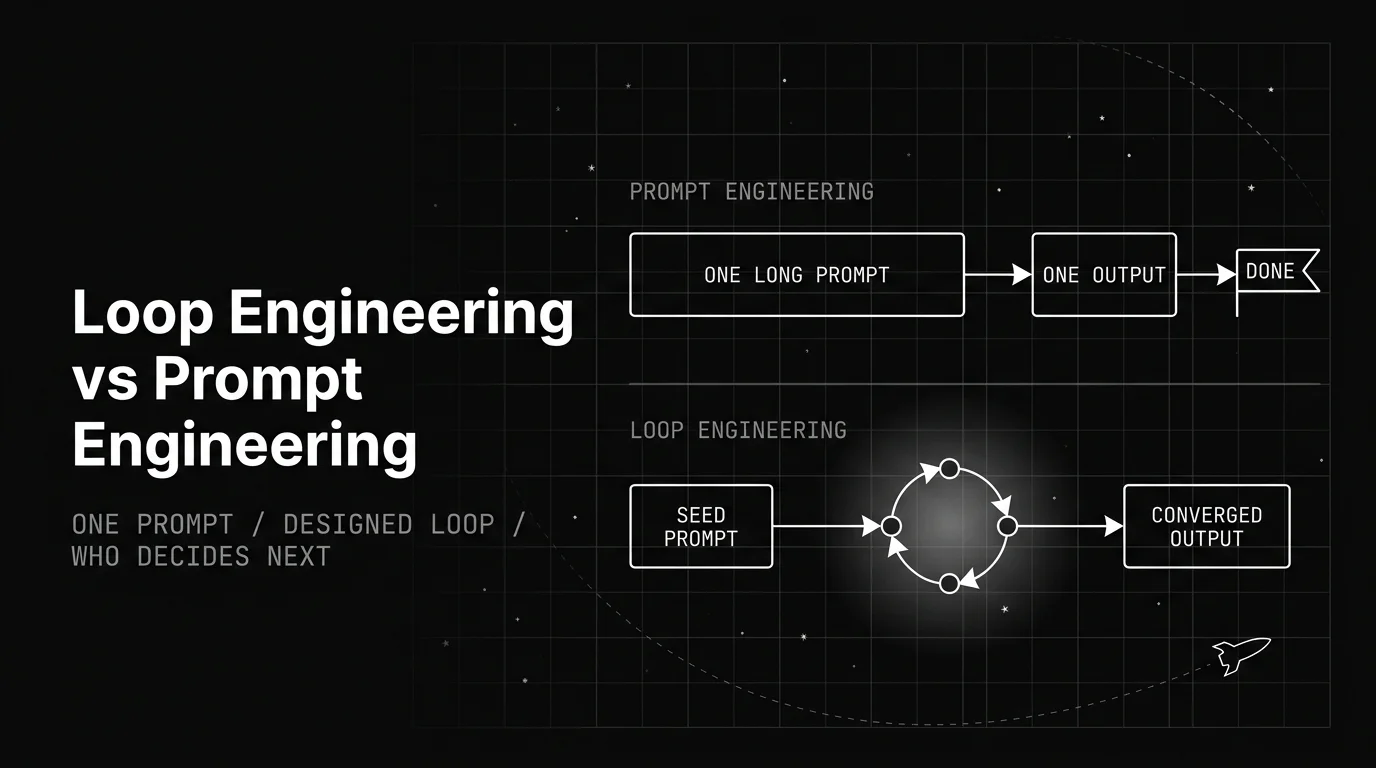
Prompt engineering shapes one request. Loop engineering designs the system that decides what to request next. Here is what actually changed, and what didn't.

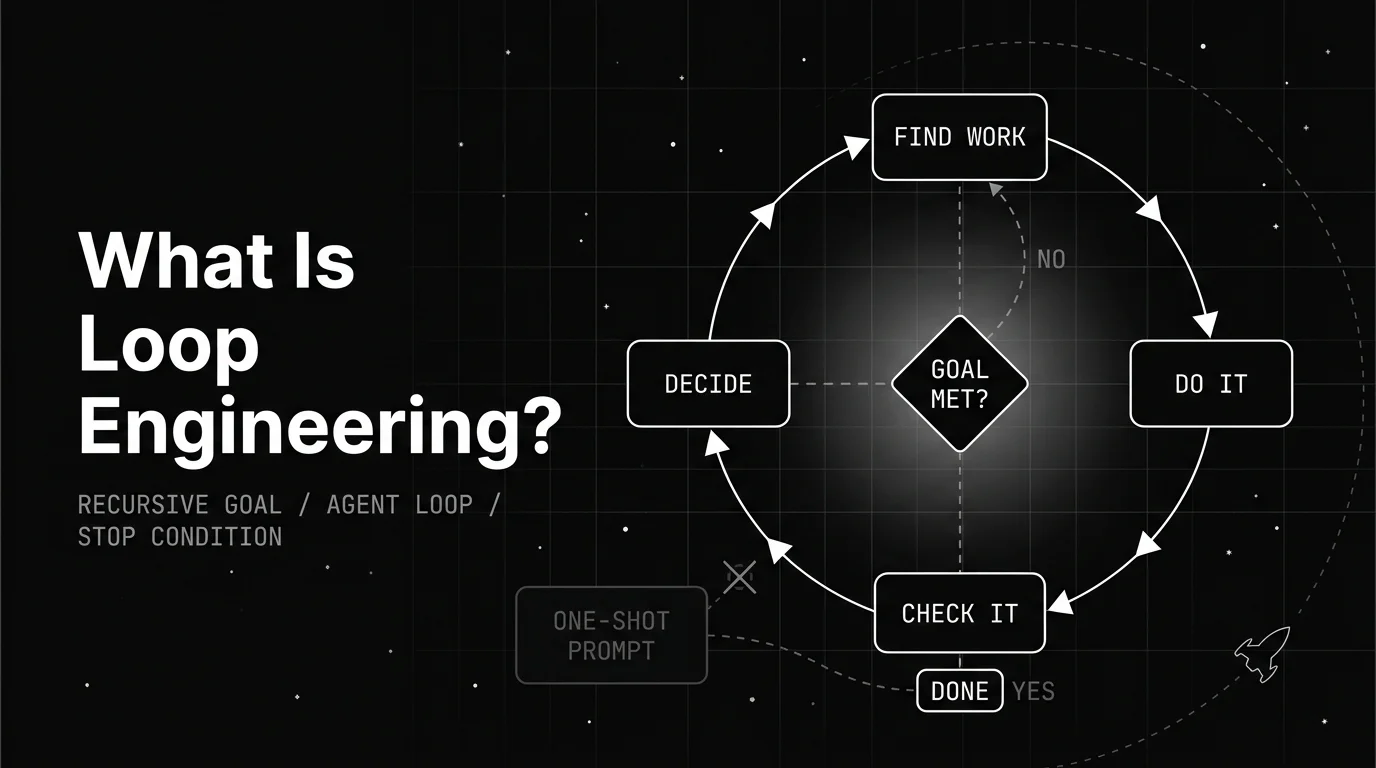
A plain-language definition of loop engineering: who coined it, what a working loop actually contains, and when building one is worth the effort.
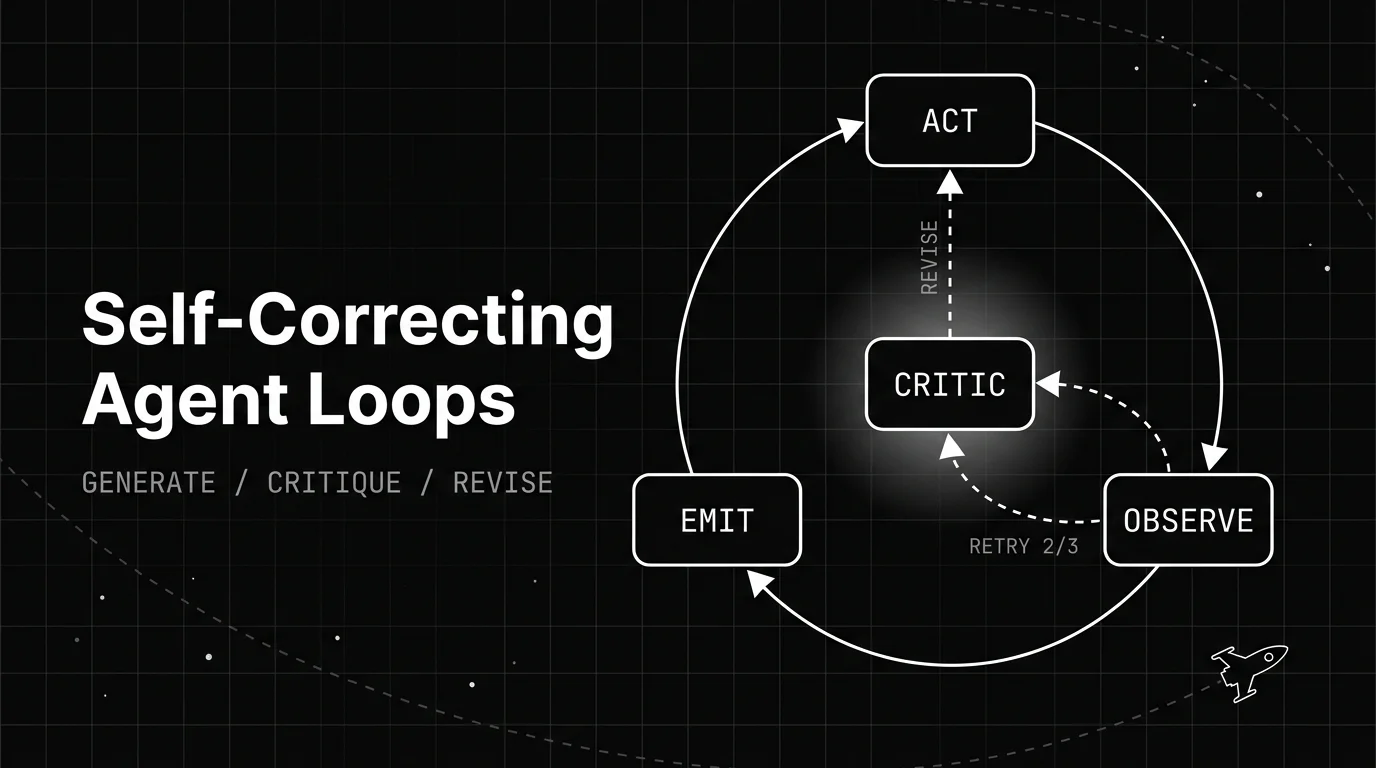
How a self-correcting agent loop spots its own bad output and revises it: the generate, critique, revise structure, the patterns behind it, and when it backfires.