When to Move From an Agentic Loop to a Simpler Deterministic Workflow
A plain decision framework for when to drop an agentic loop for a simpler deterministic workflow: the three questions to ask, the signals to watch, and how to convert one.
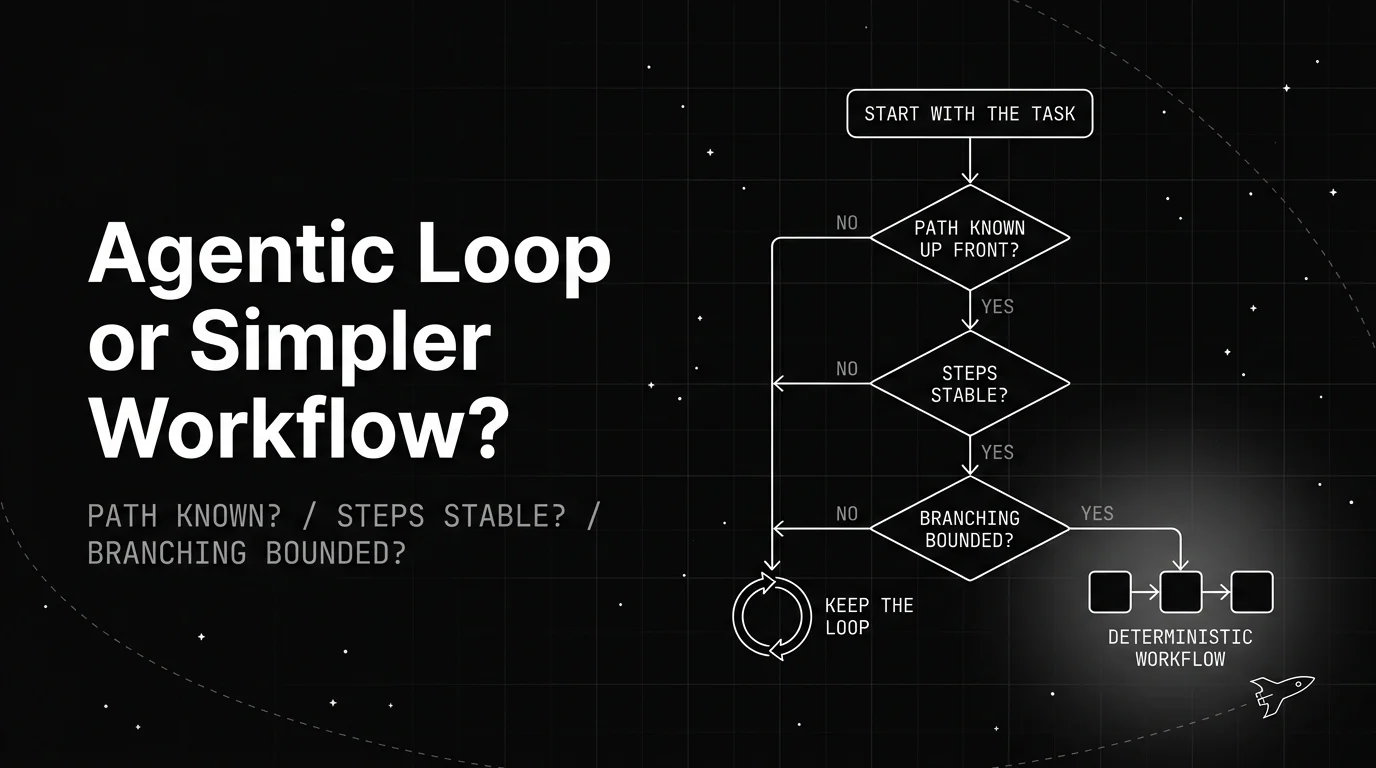
Table of Contents
An agentic loop is the right tool far less often than it gets reached for. You built one because the task felt open-ended, and now it makes several model calls to do something a short script could do in one pass, less reliably and for more money.
This is a decision guide, not a warning against agents. Sometimes the honest answer is to use less AI, and knowing when is a real engineering skill. The goal here is a clear test for when to keep the loop and when to replace it with something simpler.
TL;DR: Move from an agentic loop to a deterministic workflow when the path is known before the run, the steps are stable, and the branching is bounded. If you can describe every step in advance, fixed code runs it cheaper, faster, and more predictably than a model deciding each move.
Workflow and loop, defined side by side
Start with the two things you are choosing between. Anthropic’s Building Effective Agents gives the cleanest split, and it is worth quoting exactly because most write-ups blur it.
Anthropic defines workflows as “systems where LLMs and tools are orchestrated through predefined code paths.” It defines agents as “systems where LLMs dynamically direct their own processes and tool usage, maintaining control over how they accomplish tasks.”
That is the whole difference. In a workflow, you decide the steps and the model fills in the parts that need judgment. In an agentic loop, the model decides the steps too, and repeats until it judges the goal met.
Neither is smarter than the other. A workflow trades away flexibility for predictability. A loop trades away predictability for the ability to handle inputs you could not fully plan for. This whole guide is about telling those two situations apart before you build.
Why the simpler system should be your default
The instinct on a new problem is to reach for the loop, because it feels capable. The better instinct is the opposite. Anthropic’s own guidance is blunt: “we recommend finding the simplest solution possible, and only increasing complexity when needed.” It adds that this “might mean not building agentic systems at all.”
The reason is cost you pay whether or not you need the flexibility. An agentic loop makes several model calls to reach one answer, and each call re-sends the growing context, so spend and latency climb with every step. A workflow calls the model only where the task genuinely varies.
There is a reliability cost too. Because each step feeds the next, a wrong turn early in a loop gets built on rather than caught, which Anthropic names directly as “the potential for compounding errors.” Fixed code paths do not wander like that.
None of this means loops are bad. It means the loop should earn its place by handling something a workflow genuinely cannot, not win by default because it looked more advanced on the whiteboard.
Three questions that tell you to drop the loop
Here is the test. Ask three questions about the task, in order, and the answers tell you which system fits. This is the same tree drawn in the banner above.
First: is the path known before the run starts? If you can list the steps for a typical input ahead of time, the model does not need to discover them each run. If every input needs a genuinely different plan, that points back to the loop.
Second: are the steps stable? A path that holds steady across inputs can be written in code once. A path that shifts constantly, where step three depends on something only visible at step two, is harder to pin down and may need the loop’s flexibility.
Third: is the branching bounded? If the task splits into a handful of cases you can enumerate, a workflow with a few branches covers it. If the branches are effectively unlimited and open-ended, that is where a loop earns its cost.
Three clear yes answers mean a deterministic workflow will do the job better. A no on any of them is a reason to look harder at that specific part before you commit, not an automatic vote for the loop.
Walk the three questions through one real task
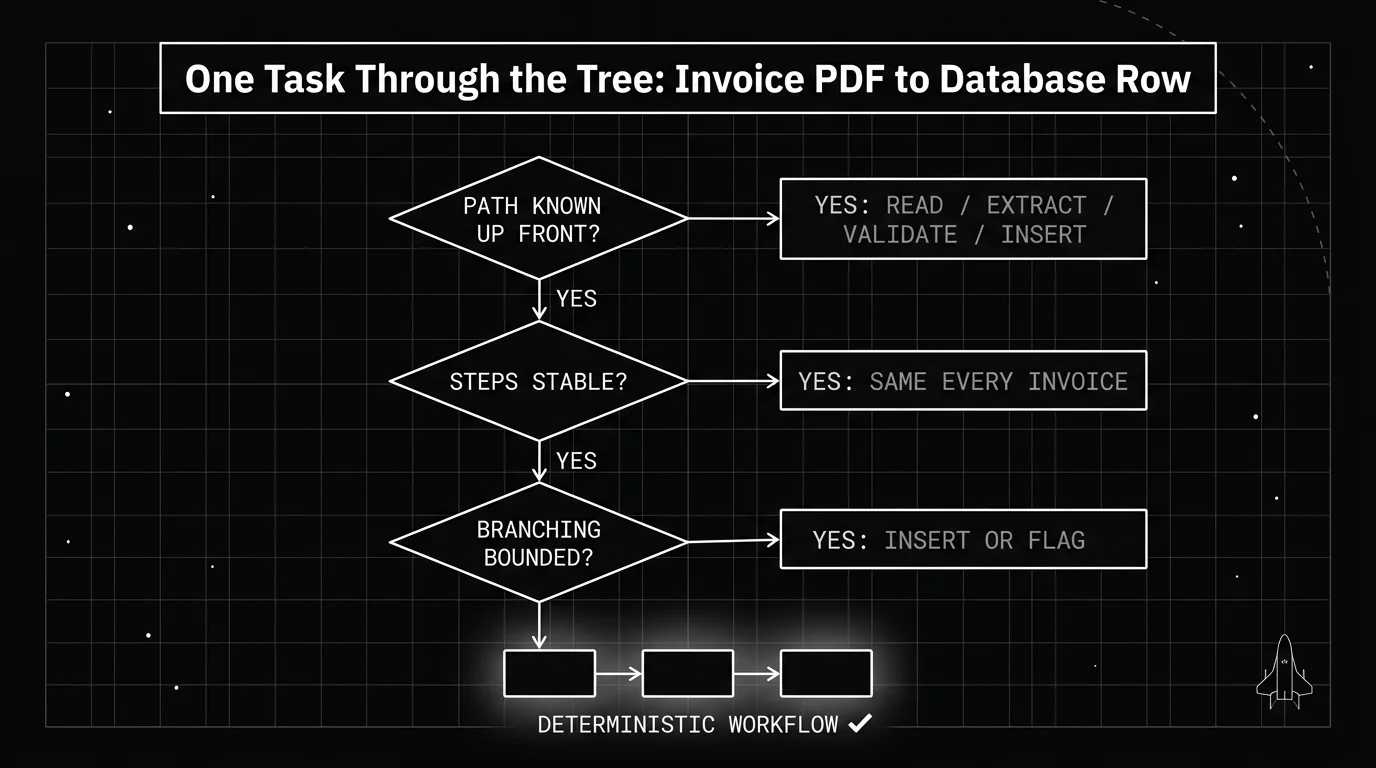
Take a concrete job: an invoice PDF arrives by email, and you need three fields out of it (vendor, amount, due date) written to a database row. Run it through the three questions.
Is the path known up front? Yes: read the file, pull the three fields, validate them, insert the row. Are the steps stable? Yes, they are the same for every invoice. Is the branching bounded? Yes: the fields are clean and you insert, or they are not and you flag the invoice for a person.
Three yeses. This is a deterministic workflow. You would call a model for exactly one part, reading messy fields out of varied PDF layouts, and let plain code handle the validation, the insert, and the flag. Wrapping the whole thing in a loop that re-decides its plan every invoice adds cost and failure modes for no gain.
Now change the task: fix a failing test in a large codebase you have not seen. The path is not known, the steps depend on what each attempt reveals, and the branches are wide open. That task keeps its loop, and rightly so.
Signals that point each way
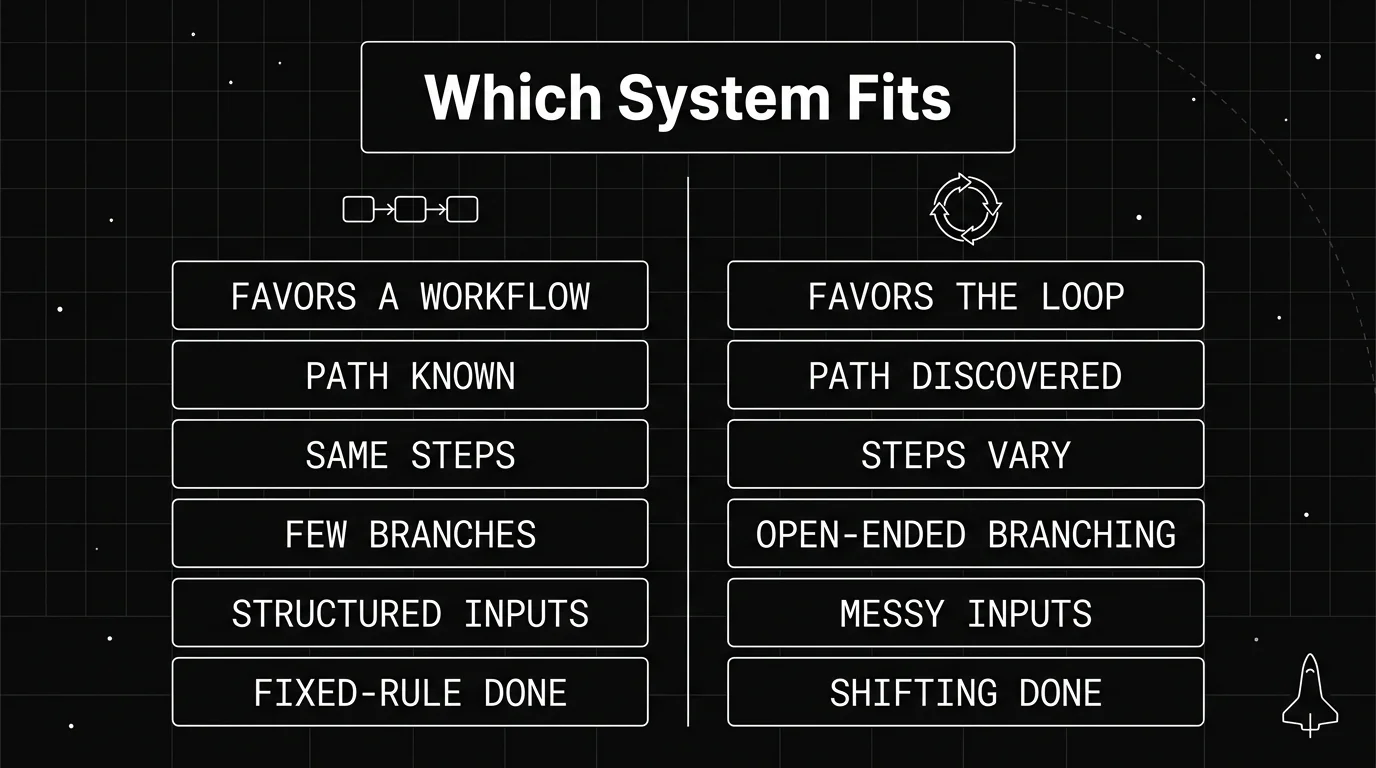
The three questions are the core test. In practice you also pick up faster signals from how the task feels and how an existing loop behaves. The table sorts the common ones.
| Signal | Favors a deterministic workflow | Favors keeping the agentic loop |
|---|---|---|
| The path | Known before the run | Discovered during the run |
| The steps | Same every time | Different per input |
| Branching | A few cases you can list | Open-ended, hard to enumerate |
| Inputs | Structured and predictable | Messy, varied, or adversarial |
| What “done” means | Checkable by a fixed rule | A judgment that shifts each time |
| Failure cost | Repeatable, easy to trace | You need the model to recover live |
Read the table as a lean, not a scorecard. If most rows sit on the left for your task, the loop is probably costing you more than it returns, and a workflow is the safer default.
How your traces tell you the loop is over-engineered
The questions above work for a new task. For a loop already running in production, you do not have to guess. Your run traces already hold the answer, and this is the part most guides skip.
Pull the traces for a few dozen recent runs and look at the actual paths. If the agent takes the same sequence of tool calls on almost every run, the flexibility you are paying for is going unused. A model deciding to do the same thing every time is a fixed path with extra steps.
Two more tells sit in the same data. If the branches you built almost never fire, the branching was not really open-ended. If the model rarely changes its plan mid-run, it is not using its control over the process, which was the whole reason to run a loop.
When all three show up together, you are looking at a workflow wearing a loop’s costume. It pays loop prices, more model calls, more latency, more ways to go wrong, and returns none of the loop’s actual benefit. That is your clearest signal to convert.
A checklist to convert an agent into a workflow
Converting is not a rewrite from scratch. You are lifting the fixed parts out of the model’s hands and leaving it only the step that genuinely needs judgment. Work through it in order.
| Step | What to do |
|---|---|
| 1. Log the real paths | Capture what the agent actually did across many runs, not what you think it does |
| 2. Find the dominant path | Identify the sequence that covers most runs; that becomes your workflow skeleton |
| 3. Replace fixed decisions with code | Any choice the model made the same way every time turns into a plain branch or call |
| 4. Keep the model where it varies | Leave an LLM call only for the step whose output genuinely changes per input |
| 5. Cover the long tail | Route the rare cases the workflow cannot handle to a fallback, or back to a loop |
| 6. Compare before you cut over | Run both on the same inputs; keep the switch only if the workflow matches on quality |
That last step matters most. Convert only when the workflow holds up against the loop on real inputs, so you are trading for predictability and lower cost, not quietly trading away quality.
When keeping the agentic loop is the right call
This guide leans toward the simpler system, but over-correcting is its own mistake. Some work genuinely needs a model steering itself. Anthropic frames it as: “workflows offer predictability and consistency for well-defined tasks, whereas agents are the better option when flexibility and model-driven decision-making are needed at scale.”
Keep the loop when the path really is discovered as it goes: open-ended debugging, research across sources you cannot list in advance, or tasks where each step depends on what the last one turned up. There the loop’s ability to recover live is the point, not overhead.
A quick contrast makes the line concrete. Turning a stack of invoice PDFs into database rows is a known path: extract the fields, validate them, insert. That is a workflow, and wrapping it in a loop only adds cost and failure modes. Debugging why a specific invoice failed to parse is the opposite: you cannot script the steps in advance, because each thing you check depends on what the last check showed. That is where the loop earns its keep.
You are also not stuck with a binary choice. Anthropic names five workflow patterns (prompt chaining, routing, parallelization, orchestrator-workers, and evaluator-optimizer) that sit between one prompt and a full loop. A common shape is a workflow that calls a model for its one variable step, then escalates to a loop only for the rare hard case.
One rule covers all of it: use the model for the part that is genuinely uncertain, and let plain code run everything you already understand. That is the judgment this whole guide is trying to build. For the loops you do keep, loop engineering is about designing them properly.
Frequently Asked Questions
When should you use a deterministic workflow instead of an agent?
Are agentic loops more expensive than deterministic workflows?
What is the difference between an agentic loop and a deterministic workflow?
Can you mix a deterministic workflow and an agentic loop?
How do I know if my agent is over-engineered?
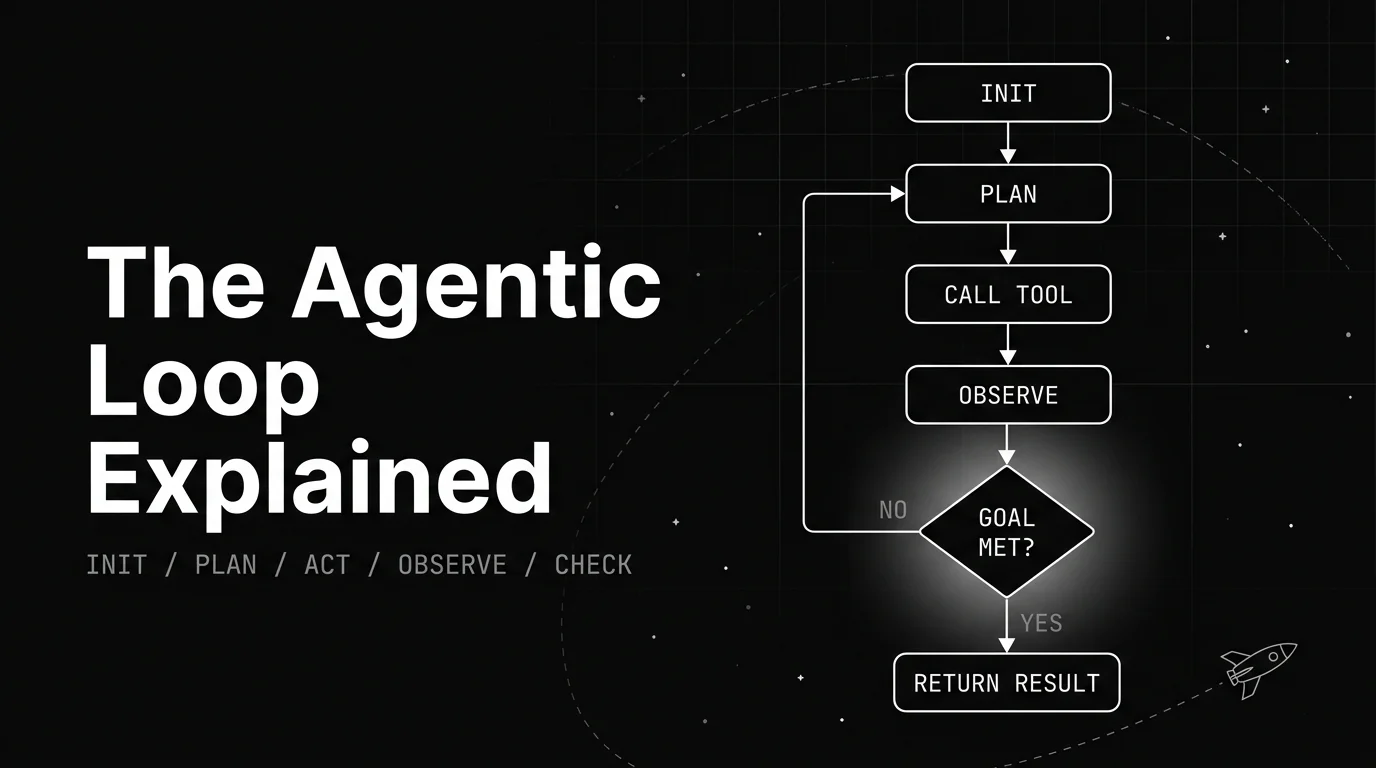
A plain walkthrough of the agentic loop: the named lifecycle stages, the canonical diagram, a worked example, and what decides when the loop stops.

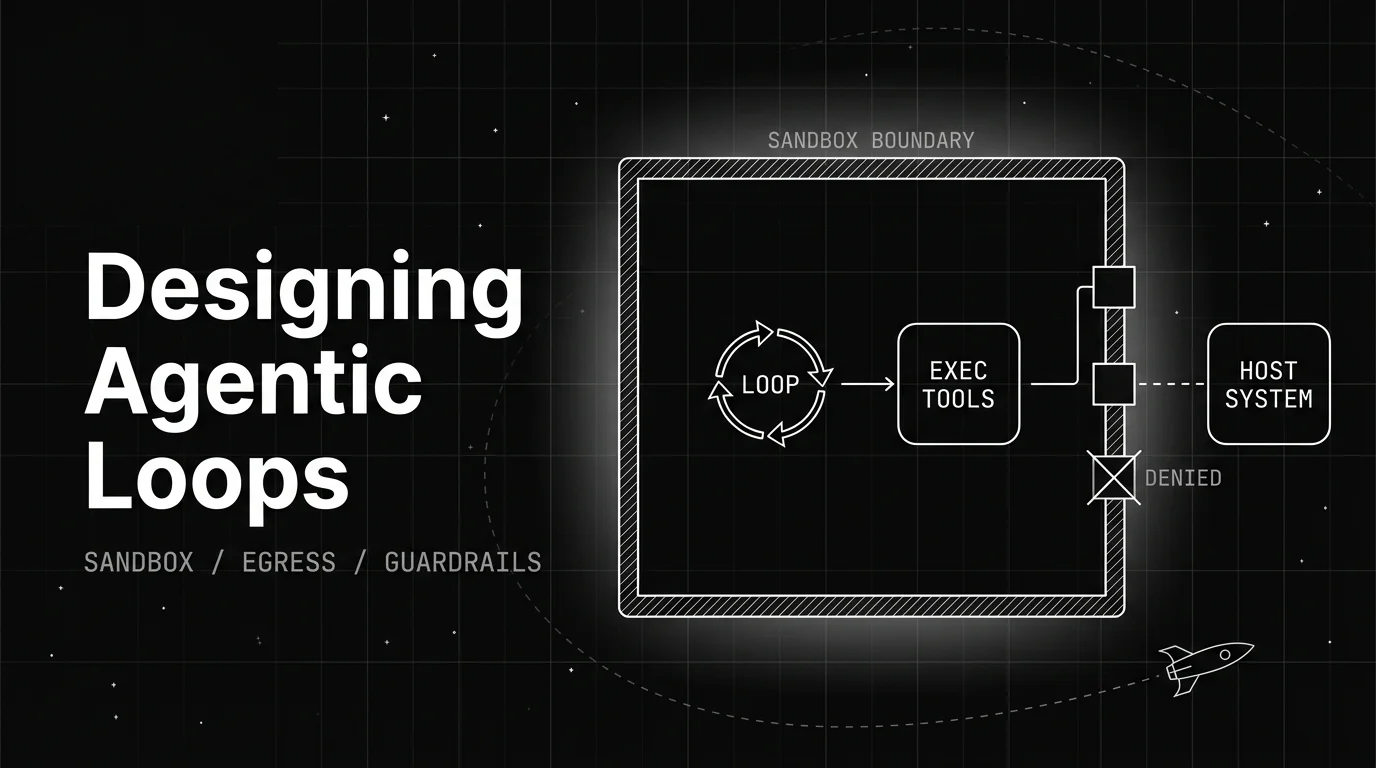
How to let an agent run code without wrecking your machine: what a sandbox boundary limits, how to scope filesystem and network access, and where guardrails fit.
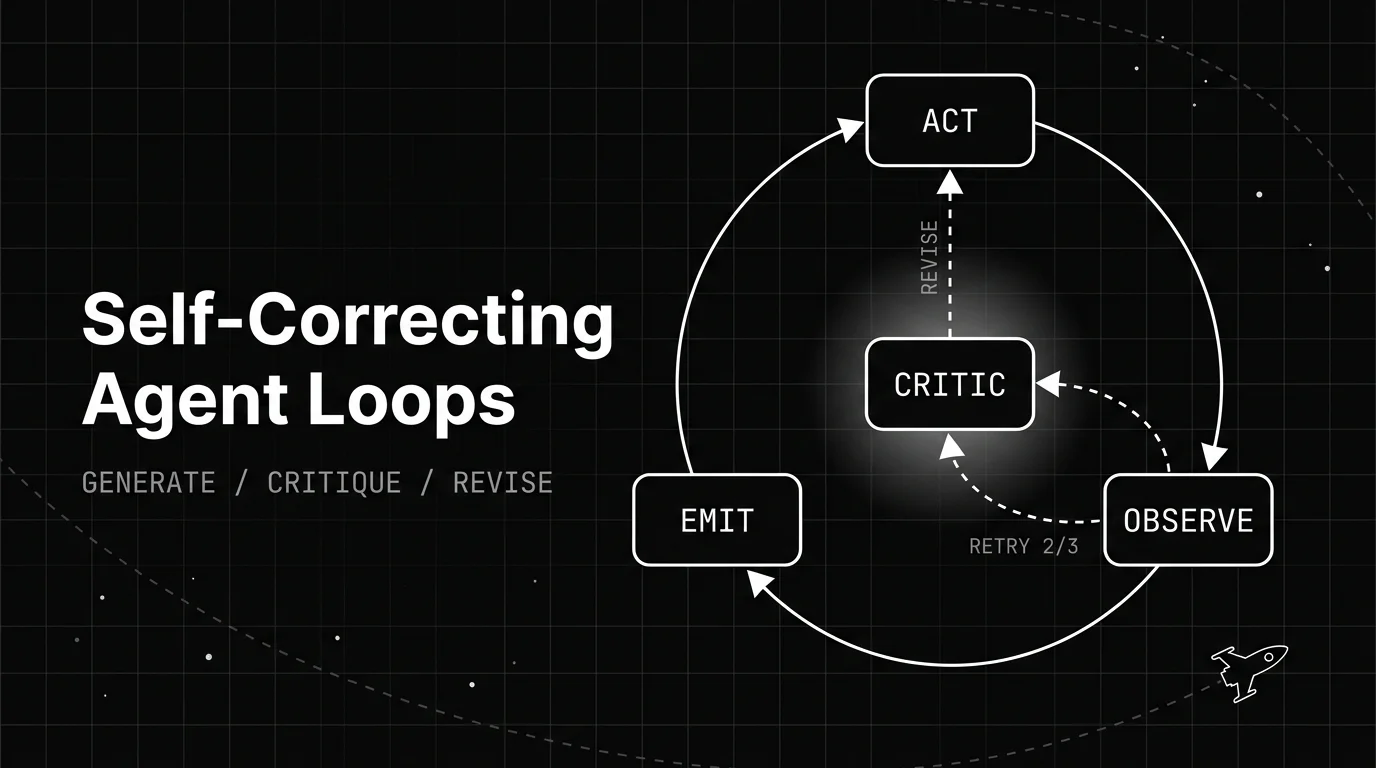
How a self-correcting agent loop spots its own bad output and revises it: the generate, critique, revise structure, the patterns behind it, and when it backfires.