LLM Inference: From Input Prompts to Human-Like Responses
Discover LLM Inference: why it matters, what it is, and how to optimize performance for real-time AI applications like chatbots and virtual assistants.
Table of Contents
-
Introduction
Artificial intelligence moves faster than most of us can finish our morning coffee. Right at the heart of that acceleration sits LLM inference-the moment a trained giant like GPT-4 or PaLM turns your prompt into a fluent reply. You see it in customer-support chatbots, content-drafting tools, and even search engines that talk back. But what’s really going on under the hood, and why is it such a game-changer? This article walks through LLM inference step by step, highlights the key performance metrics, flags the biggest hurdles, and closes with proven optimisation tricks that keep models both speedy and accurate.
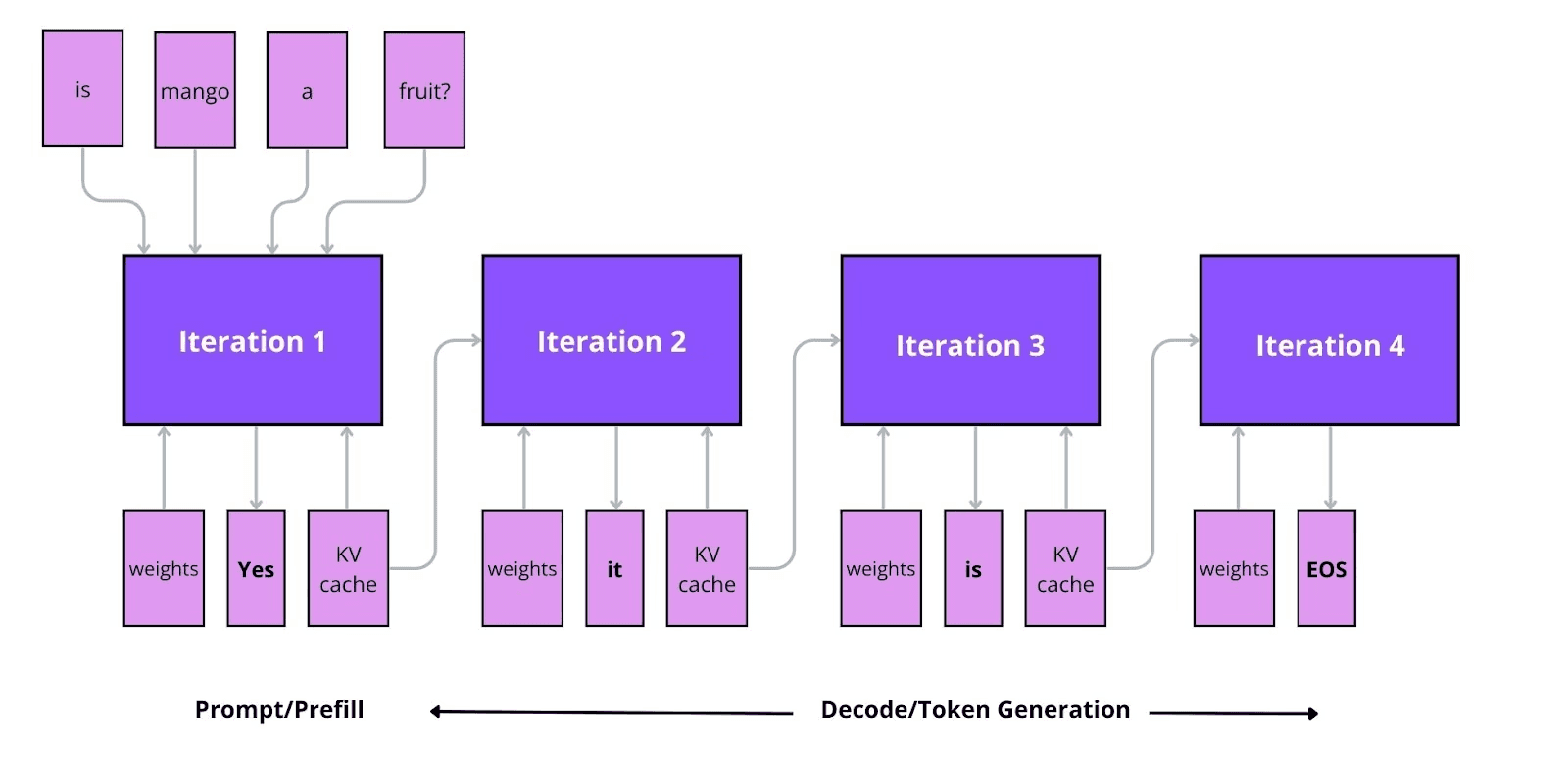
Image 1: Concept sketch showing an LLM converting an input prompt into an output sequence.
-
How LLM Inference Works
2.1 Tokenisation
Think of tokenisation as breaking a sentence into Lego bricks. Each “brick” (a token) could be a whole word, a sub-word chunk like -tion, or even a single character. The model swaps those bricks for numbers from its training vocabulary so it can “do the math” of language.
2.2 Contextual processing
Next, the model scans those numbers against a giant map of patterns, grammar rules and semantic clues it absorbed during training. By constantly guessing the most likely next token-while weighing word order, idioms and implied meaning-it builds an answer that sounds natural rather than robotic.
2.3 Decoding strategies
The raw guesses still need polishing. Popular strategies include:
- Greedy search – always grabs the single most likely next token (quick but can get repetitive).
- Beam search – explores several candidate sentences at once before picking the winner.
- Top-k / nucleus sampling – adds a dash of randomness by choosing from the top-k or top-p tokens, which often sparks more creative replies.
2.4 Output generation
Finally, the chosen tokens are stitched back into text. The system may tidy up formatting, check for coherence in longer passages, or enforce safety filters-all in a blink of an eye. That split-second choreography is why properly tuned inference feels “instant” in live chat, voice assistants and search.
-
LLM Inference Performance Metrics
- Latency – the lag between prompt and answer. Low latency is non-negotiable for real-time UX.
- Throughput – how many inferences per second a system can churn out, crucial for scale.
- Perplexity – a statistical measure of how confidently the model predicts the next token (lower is better).
- Token efficiency – squeezing maximum meaning into each token window so you pay less and deliver more.
- Energy consumption – the wattage behind every reply; optimising it cuts cloud bills and carbon footprints.
-
Common LLM-Inference Challenges
- High computational cost – large models crave premium GPUs like A100s or H100s. That hardware burns cash and kilowatts.
- Latency bottlenecks – bigger models often mean slower answers unless you apply quantisation, caching and smart batching.
- Context length limits – transformers still struggle with very long documents; RAG and memory-efficient variants help but don’t solve everything.
- Bias & ethics – training data can smuggle in social or cultural biases, so teams lean on curation, bias monitors and RLHF.
- Scalability – serving millions of requests demands load-balancing, distributed memory and, sometimes, distilled “mini-models.”
-
Techniques for Optimising LLM Inference
-
Model quantisation – drop precision from FP32 to INT8; memory shrinks, speed leaps, accuracy hardly budges.
-
Efficient caching – keep key-value pairs from earlier turns so follow-up prompts feel instant.
-
Hardware acceleration – TPUs and specialised AI chips can slash both time-to-answer and energy use.
-
Distillation & pruning – a small student model absorbs the know-how of a big teacher, while unused neurons get trimmed.
-
Parallelisation & batching – process multiple prompts at once; tensor and pipeline parallelism spread the load across devices.
Together, those tactics turn heavyweight models into practical, cost-friendly workhorses.
Summary
LLM inference is the secret sauce that lets machines answer like humans, at scale, in real time. By understanding the workflow, measuring what matters, and applying the right accelerators-from quantisation to smart caching-teams can cut costs, crank up speed and widen the accessibility of advanced language tech.
Protect Your AI with Confidence – Discover How Future AGI Ensures Safe and Reliable LLMs
Future AGI focuses on keeping inference fast, safe and trustworthy. Real-time monitors flag harmful content, while Future AGI Protect screens and filters risky outputs before they ever reach a user. Curious how it works in practice? Learn more and see your LLMs run safer, leaner and smarter.
FAQs
Q1: What is LLM inference in AI?
LLM inference refers to a procedure whereby a pre-trained LLM like GPT or PaLM receives a prompt and produces a human-like response. It refers to splitting a piece of text into tokens and processing those tokens based on context followed with decoding. This process allows the applications such as chatbots, content creators and virtual assistants to respond fast and naturally.
Q2: How does LLM inference work?
LLM inference happens with the steps of tokenization, context processing, decoding and output generation. First, the input is converted into numerical tokens The model then predicts the next possible tokens according to its already trained parameters. Strategies are used to derive the output intelligently so that it makes sense, is contextually appropriate, and sounds natural, all in a matter of milliseconds.
Q3: Why is LLM inference important for real-time AI applications?
AI systems can provide fast, accurate, and human-like responses through LLM inference, making it a crucial element for real-time applications like chatbots, virtual assistants, and AI-based search engines. Inference speed and efficiency are essential to the user experience. They are important for developing responsive tools that can facilitate live user interactions.
Q4: What are key performance metrics for LLM inference?
We specifically measure LLM inference based on latency, throughput, perplexity, token efficiency, energy-based efficiency etc. A range of metrics are used to assess the speed and efficiency of LLM inference. Performance is one such metric. Throughput refers to how many queries a model processes at the same time. Enhancing these metrics boost performance, cost reduction and user experience.
Related Articles
View all
What is LLM Observability & Monitoring?
Learn why LLM observability matters, what to track, and how to build low-latency, cost-efficient monitoring for production-ready AI systems.


Why Chain of Draft Is the Superpower You’re Missing in LLM Prompting
Master Chain of Draft for rapid, precise LLM prompting - surpass Chain of Thought, slash tokens, scale GenAI via Future AGI observability.


How to Build an LLM Evaluation Framework from Scratch
Explore LLM evaluation tools plus framework, metrics, performance benchmarks. Boost accuracy, reliability, bias control via Future AGI guide 2025 tips.