Choosing the Right Offline Evaluation Tool for Pre-Deployment Testing: 5 Questions to Ask
Five questions for choosing an offline evaluation tool for pre-deployment testing: run on a test set, build one without data, catch regressions, and gate CI.
Table of Contents
The fastest way to choose the wrong offline evaluation tool is to grade it on how many metrics it ships and never ask whether it can build a test set or block a bad deploy. A team is about to ship a prompt change. They run it through an eval tool, the numbers look fine, and it goes out. There was no fixed test set, so the run graded a handful of cases someone pasted in that morning; there was no comparison against the current version, so a quiet regression on a case they did not include sailed through; and nothing gated the merge. The change shipped, the regression was real, and the offline step that was supposed to catch it had measured the wrong thing.
That is the job an offline evaluation tool exists to do, and it is why a long metric list is the wrong thing to shop on. Offline evaluation is the pre-deployment gate: a reproducible run over a representative test set that tells you a change is safe before users see it. So choosing an offline evaluation tool is not about how many scores it can compute. It is about whether you have a real test set, whether you can build one when you have no data, whether it catches regressions, and whether it blocks the ship. Here are the 5 questions that separate a real offline evaluation tool for pre-deployment testing from a metric calculator, and how to answer each.
TL;DR: choose an offline evaluation tool that runs on a curated test set with no live traffic, can build that set from synthetic data when you have none, scores open-ended outputs without ground truth, catches regressions against a baseline, and gates the deploy in CI. Passing offline is necessary, not sufficient.
For where this sits in the wider stack, see offline benchmarks versus production evals.
Why choosing an offline evaluation tool is harder than it looks
The trap is that almost any tool can score one output, so they all look like evaluation tools until you need to run a real pre-deployment gate. A gate needs a fixed, representative test set, not a handful of cases pasted in ad hoc, because a score on an unrepresentative sample tells you nothing about the change. It needs to compare the new version against the current one on that same set, or a regression on a case you happened to leave out ships silently. And it needs to fail the build, or it is a report nobody is required to read.
The second trap is the cold start. The hardest time to evaluate offline is exactly when you most need to, at the start of a new feature with no production data to test against. A tool that can only score data you already have leaves a new project with nothing to gate on. So the buying decision for an offline evaluation tool is whether you can assemble or generate a real test set, compare versions on it, and block a regression before it ships. The 5 questions below are weighted toward exactly that.
The 5 questions to ask before you choose
The Pre-Deployment Eval Test. Score each question pass or fail. Aim for four or more. The rule it encodes: offline evaluation is the last gate before users, so it must run reproducibly on a representative test set and block the ship on a regression.
| # | Question | Pass if the tool… |
|---|---|---|
| 1 | Test set, not live traffic | Runs in batch over a curated test set, offline |
| 2 | Build the set | Generates a test set when you have no production data |
| 3 | No ground truth | Scores open-ended outputs without a labeled answer |
| 4 | Regression gate | Compares versions and blocks the deploy in CI |
| 5 | Honest scope | Does not claim passing offline guarantees production |
1. Does it run on a curated test set, offline, with no live traffic?
Why it matters: the whole point of pre-deployment testing is to evaluate before users do, which means a reproducible batch run over a fixed test set, not a check that needs live traffic to produce a signal.
What to look for: a tool that runs your candidate prompt or model over a curated dataset in batch, scores every case, and produces a reproducible result you can rerun and compare, all without a single production request.
What to avoid: an online-only monitor that only works once traffic is flowing, so it cannot tell you anything before you ship.
How FutureAGI fits: FutureAGI’s evaluation layer runs batch evaluation over a dataset of test cases entirely offline: you point it at a versioned test set, it scores every case with your metrics, and the run is reproducible, so the same set re-scores identically when you compare versions. No production traffic is involved, which is what makes it a true pre-deployment gate. An online-only tool misses this because it has nothing to measure until after you ship. For the mechanics, see the evaluation docs.
2. Can it build the test set when you have no production data yet?
Why it matters: the hardest moment to evaluate is the start of a new feature, when there is no traffic to test against. A tool that can only score data you already have is useless exactly when you most need a pre-deployment gate.
What to look for: a way to generate a representative test set from synthetic data and simulated personas and scenarios, so a brand-new system has something to evaluate against on day one, before any user arrives.
What to avoid: a tool that assumes you already have a labeled dataset, leaving a new project with nothing to run a gate on.
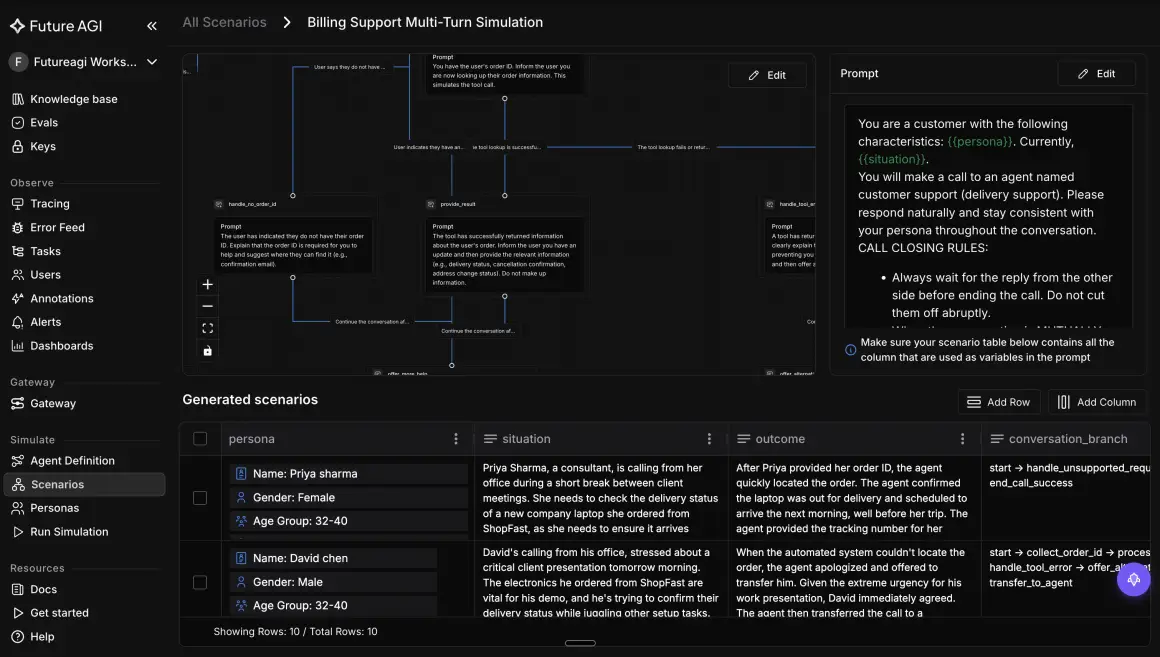
How FutureAGI fits: FutureAGI’s Simulate generates a test set when you have none: you define the personas and situations your system will face, and it produces diverse scenarios with their expected outcomes and conversation branches. The screenshot below shows a generated scenario set for a billing-support assistant, with personas, situations, and outcomes, so the suite exists before the first real conversation does. A tool that only scores existing data misses this because a new feature has no data to score, and the cold start is exactly when a gate matters most.
3. Can it score open-ended outputs without ground truth?
Why it matters: most of a real test set is open-ended (a summary, an answer, a reply), and hand-labeling a gold answer for every case is exactly the work you are trying to avoid. The tool has to grade support and quality, not just match a reference.
What to look for: reference-free LLM-as-judge metrics for the open-ended cases, plus deterministic checks for the cases that do have a reference, so you grade the whole set without labeling every row by hand.
What to avoid: a tool whose only metrics are match-based, which forces a gold answer for every test case and makes a real-sized set impractical.
How FutureAGI fits: FutureAGI scores open-ended test cases reference-free with LLM-as-judge metrics like groundedness, faithfulness, and helpfulness, so the bulk of a curated set scores without a gold answer, and reserves deterministic local checks like JSON-schema or BLEU for the cases that do carry a reference. That means a thousand-case test set does not require a thousand hand-labeled answers, just a small labeled slice to calibrate the judge. A match-only tool misses this because hand-labeling the whole set is precisely the pre-deployment work you were trying to avoid.
4. Does it catch regressions and block the deploy in CI?
Why it matters: the value of a pre-deployment gate is stopping a regression before it ships, and that only works if the new version is compared against the current one on the same set and the build actually fails when it gets worse.
What to look for: version comparison against a fixed baseline on the identical test set, with the same evaluators running in CI to block a merge when a primary metric drops below your threshold.
What to avoid: a tool with no baseline comparison or CI hook, which can produce a number but cannot stop a worse version from shipping.
How FutureAGI fits: FutureAGI runs experiments that compare prompt and model versions against the same fixed dataset and surface the per-metric deltas, and the same evaluators run in CI to gate a deploy, blocking the merge when a score regresses past your threshold versus the baseline. So a regression on the test set fails the build instead of reaching users. A tool with no comparison or gate misses this because a standalone score cannot catch a relative regression. For the wiring, see CI/CD LLM eval with GitHub Actions and prompt regression testing.
5. Does passing offline guarantee production success?
Why it matters: here the honest answer protects you. A tool that frames a green offline run as proof the model is production-safe is selling false confidence, and you will trust it exactly where your test set was blind.
What to look for: a tool that treats offline as the cheap gate for known failure modes and is clear that production traffic surfaces what your set did not, so you plan for online evaluation rather than assuming offline covered it.
What to avoid: a vendor implying that a passing pre-deployment run means the model is safe live, which is the claim least likely to survive contact with real users.
Where FutureAGI is honest about this one: FutureAGI treats offline evaluation as necessary, not sufficient. It catches the failure modes in your test set cheaply, before you ship, but live traffic always brings phrasings and edge cases the set never had, so an offline-green build can still fail in production, which is why an agent can pass evals and still fail live. FutureAGI is built to pair the offline gate with online evaluation on production traffic and to feed real failures back into the offline set, rather than pretending the pre-deployment run was the whole story. If you only want a one-off accuracy number on a tiny labeled set, a plain script is lighter than a platform.
A quick decision framework
The questions are the test; here is how the answers map to a pick.
| Choose | When | What decides it |
|---|---|---|
| A test-set-first offline tool | You need a reproducible gate before every ship | Questions 1 and 4; if it cannot rerun a fixed set or block a regression, it is a calculator |
| A generation-capable tool | You are starting a feature with no production data | Question 2; a tool that only scores existing data cannot gate a cold start |
| A reference-free tool | Most of your test cases are open-ended | Question 3; a match-only tool needs a gold answer you do not have |
| Offline plus online | You ship to real users and care what they hit | Question 5; offline is the gate, online is the truth |
Where FutureAGI fits
The 5 questions get you a real pre-deployment gate: a reproducible test set, generated when you lack one, scored without labels, and blocking regressions in CI. Past the gate itself, three things matter to teams running offline evaluation that the checklist does not cover: seeing where a candidate diverged, carrying the same eval into production, and growing the set from real failures.
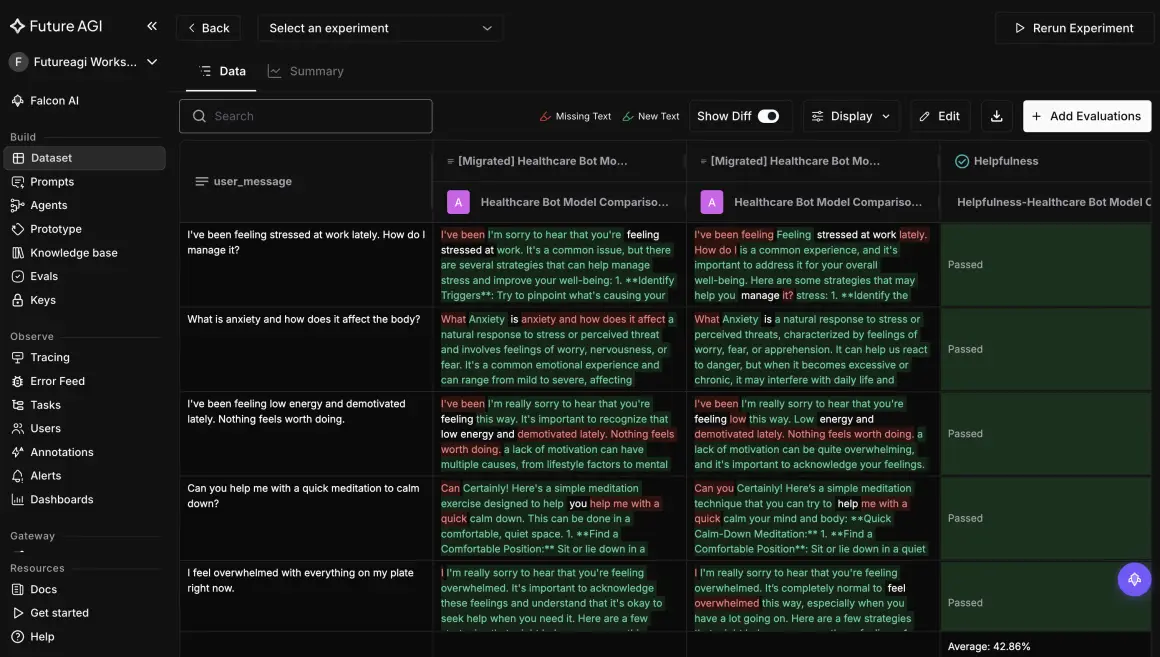
See exactly where a candidate diverged, not just that it did. A pass or fail on the suite tells you a version regressed; it does not tell you which cases changed or whether a diff is a regression or an improvement. FutureAGI’s experiments show side-by-side per-row output diffs between two versions with the eval score on each row, so you read the actual change and decide. The screenshot below compares two model versions case by case, with the diffs highlighted and a helpfulness score per row.
Carry the same offline eval into production. The evaluator you gated the deploy on does not have to stop at CI: the same definition runs online on production traffic, with the score attached to the trace, so the offline gate and the production monitor are the same check. That is what closes the gap the honest answer to Question 5 warns about, instead of leaving offline and online as two disagreeing systems.
Grow the test set from real production failures. A failure that slips past the offline gate is the most valuable case you will ever get, so FutureAGI lets you capture it back into the dataset, so the offline suite learns from production and the same bug is gated on every future deploy. The set starts synthetic, then compounds with real cases.
Where FutureAGI is not the pick: if all you need is a one-off accuracy check on a small labeled set, a plain script beats standing up a platform. FutureAGI earns its place when the offline suite is a maintained, reproducible gate that runs on every change and continues into production.
See the Evaluate platform overview, the evaluation docs for datasets, experiments, and CI gating, or the simulation docs for generating a test set.
What to read next
- Offline Benchmarks vs Production Evals (2026): why the pre-deployment gate and the production signal are different jobs, the idea behind Question 5.
- Prompt Regression Testing (2026): how to catch a regression before it ships, the practice behind Question 4.
- Best LLM Dataset Management Tools (2026): managing the test sets your offline gate runs on, if you are still scoping.
- Best LLM Evaluation Tools (2026): if you would rather see specific tools ranked than work the questions yourself.
Frequently Asked Questions About Offline Evaluation Tools
What is an offline evaluation tool?
An offline evaluation tool scores your model or agent against a curated test set before you ship, rather than on live production traffic. You assemble a set of representative cases, run them through the candidate prompt or model in batch, score the outputs with your metrics, and decide whether to deploy. It is the pre-deployment gate: reproducible, run on demand, and independent of real users. Offline evaluation catches the failure modes your test set covers, which is why it pairs with online evaluation that watches what production surfaces after you ship.
How is offline evaluation different from online evaluation?
Offline evaluation runs before deployment, on a fixed test set you control, so it is reproducible and can gate a release in CI. Online evaluation runs after deployment, on live production traffic, so it catches what your test set never anticipated. They are complementary halves of one loop: offline tells you a change is safe to ship against the cases you know, and online tells you whether it actually held up against the cases you did not. A tool that does one but calls it complete leaves half the loop open.
How do you build a test set when you have no production data yet?
You generate one. For a new feature with no traffic, synthetic data and simulated personas and scenarios produce a representative test set so you can evaluate before the first user arrives. You define the personas and situations your system will face, let the tool generate diverse scenarios, and keep a small hand-checked slice to calibrate the judge. As real traffic arrives, you fold actual cases and failures back into the set, so it starts synthetic and grows real.
Can an offline evaluation tool catch regressions before deployment?
Yes, that is its main job. You run the new prompt or model against the same fixed test set as the current version, compare the scores per metric and per case, and block the deploy if a primary metric drops below your threshold. Running it in CI on every change that touches prompts, models, retrieval, or tools turns regression detection into an automatic gate rather than a manual spot check. The key is that both versions run on the identical test set, so the comparison is real and not noise.
Does passing offline evaluation guarantee the model works in production?
No, and a tool that implies it does is misleading. Offline evaluation only tests the cases in your set, and production always brings phrasings, contexts, and edge cases you did not anticipate, so an offline-green build can still fail live. Offline evaluation is necessary but not sufficient: it is the gate that catches known failure modes cheaply before you ship. You pair it with online evaluation on production traffic to catch the rest, and you feed the production failures back into the offline set.
Six factors for choosing an LLM evaluation SDK for engineering teams: evals in code and CI, no-ground-truth scoring, and local-plus-judge routing.

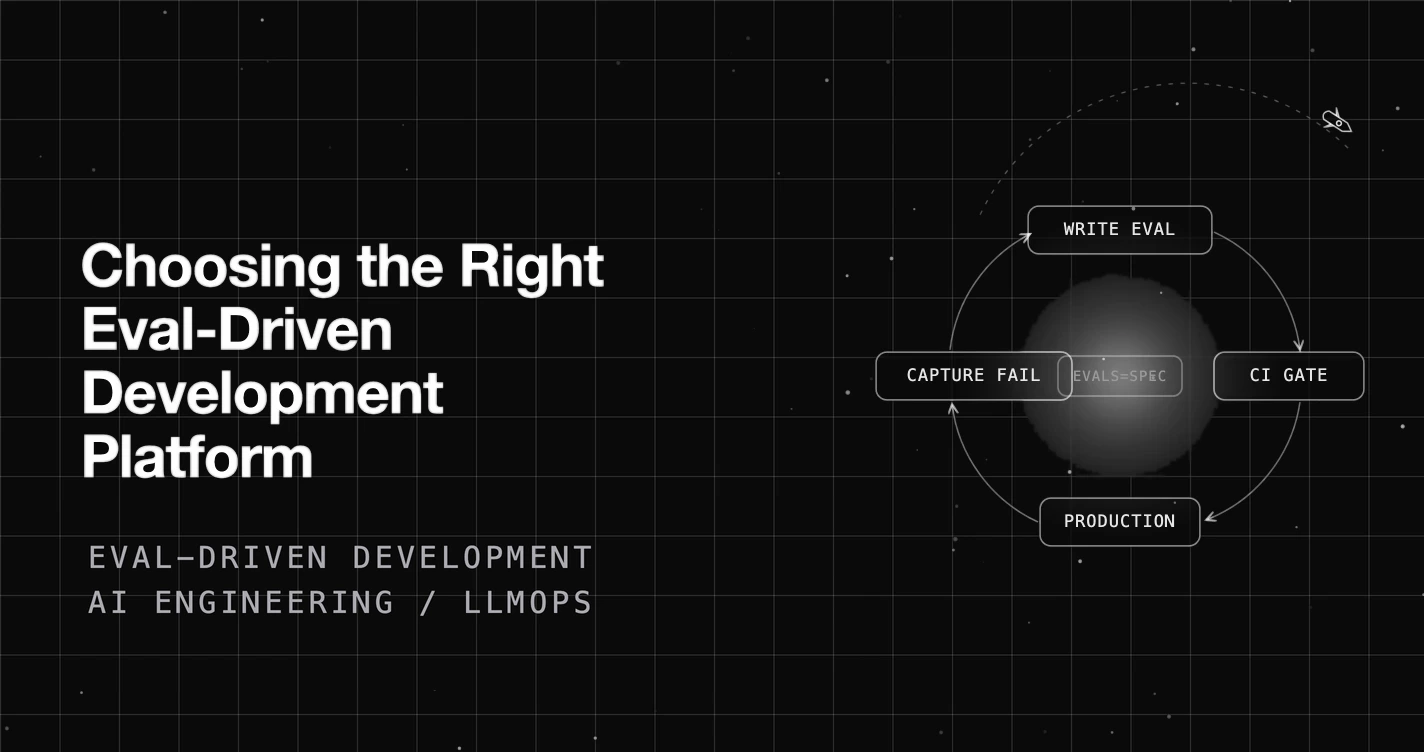
Eight factors for choosing an eval-driven development platform for AI teams: evals as spec, CI gating, dev-prod parity, regression loops, and optimization.

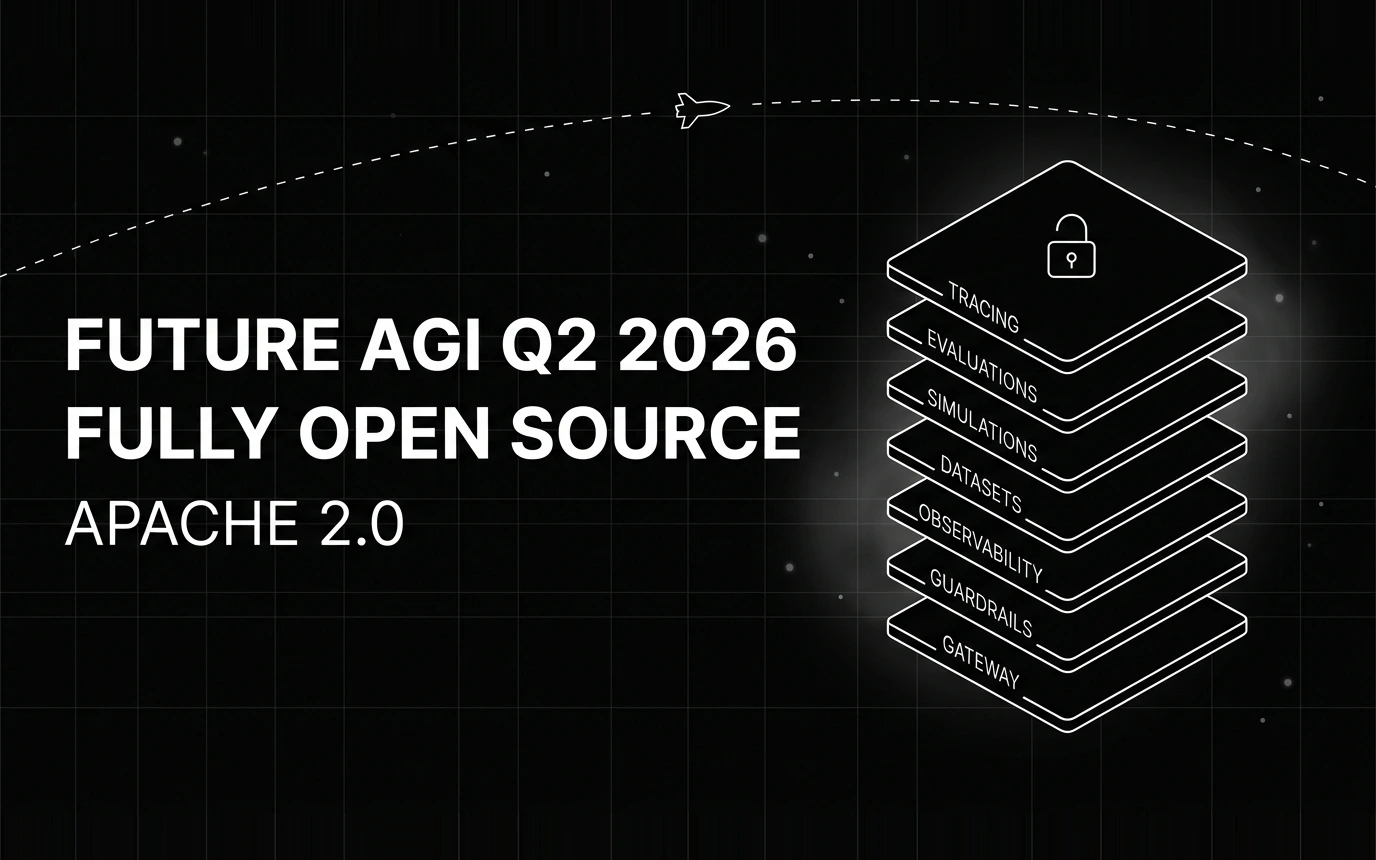
Inside Future AGI open source in Q2 2026: the platform shipped under Apache 2.0, Error Feed and the Agent Command Center went live, traces hit billions.