AI Explainability in 2026: Tools, Techniques, and Frameworks to Build Transparent AI Systems
AI explainability in 2026: SHAP, LIME, attention maps, chain-of-thought audits, mechanistic interpretability, and tools that satisfy EU AI Act.
Table of Contents
AI Explainability in 2026: Tools, Techniques, and Frameworks to Build Transparent AI Systems
AI explainability is the discipline of producing trustworthy reasons for model decisions. In 2026 it is no longer optional in regulated industries, the LLM era has pushed interpretability research in two directions (post-hoc faithfulness evaluators plus mechanistic circuit-level work), and the EU AI Act now codifies which obligations apply at which risk tier. This guide covers the methods, the tools, the metrics, and the operational stack that makes explainability part of the production loop.
TL;DR
| Question | Answer (May 2026) |
|---|---|
| Interpretability vs explainability | Interpretability = inspectable internals. Explainability = clear reasons for a prediction, often post-hoc. |
| Top tabular methods | SHAP, LIME, Permutation Importance, counterfactual explanations. |
| Top deep-learning methods | Integrated Gradients, DeepLIFT, LRP, attention attribution. |
| Top LLM methods | CoT plus faithfulness evaluator, mechanistic interpretability research, attribution patching. |
| Regulatory drivers | EU AI Act (GPAI in effect Aug 2025, high-risk phase-in 2026-2027), GDPR Art. 22, NIST AI RMF, ISO/IEC 42001. |
| Production stack | Faithfulness evaluators in CI + production sampling; OpenTelemetry traces for every step. |
| Open-source license benchmark | traceAI and ai-evaluation ship Apache 2.0. |
What changed since 2025
Three shifts redefined explainability between 2025 and 2026.
First, the EU AI Act entered application phases. GPAI obligations under Article 53 and Article 55 have been in effect since 2 August 2025 per the official Commission timeline. High-risk system obligations under Annex III continue to phase in through 2 August 2026 and 2 August 2027. High-risk systems must provide outputs that users can interpret and use appropriately.
Second, mechanistic interpretability research started shipping usable tools. Anthropic’s Circuits Updates and the TransformerLens library on GitHub gave researchers practical entry points into circuit-level analysis of frontier transformer models. The work is not yet a compliance artifact, but it is a meaningful gain in causal explanation.
Third, the production pattern moved from one-off explanations to evaluator pipelines. Faithfulness, hallucination, and groundedness evaluators now run on every release and on production samples, so a model whose stated reasoning drifts from its actual behaviour gets flagged automatically. The same evaluator catalog powers explainability and observability.
Why AI Explainability Is Now a Legal and Ethical Requirement Under GDPR and the EU AI Act
Explainability used to be a research topic. In 2026 it is a deployment requirement.
The EU AI Act final text sets risk-tiered obligations. High-risk systems must let users interpret system output and use it appropriately. Providers must produce technical documentation, logging, and human-oversight mechanisms.
GDPR Article 22 restricts decisions based solely on automated processing, including profiling. Article 22 is commonly read together with the transparency and access provisions in Articles 13, 14, and 15 (which require “meaningful information about the logic involved” for automated decision-making) to produce a de-facto explainability obligation for EU-facing systems.
Sectoral regulators add layers. The US CFPB requires adverse-action reasons for credit decisions. The FDA Software as Medical Device guidance expects model documentation that supports interpretability of outputs. The NIST AI Risk Management Framework and the NIST AI 600-1 Generative AI Profile provide the operational taxonomy.
What Is AI Explainability? Interpretability vs Explainability Explained
Two terms with a clear distinction.
Interpretability is a property of the model. An interpretable model is one a human can read. Decision trees, linear regressions, generalised additive models (GAMs), and monotonic gradient-boosted models are interpretable by construction.
Explainability is a property of the explanation. An explainable system can produce a clear reason for a specific output, even if the model’s internals are opaque. The reason can come from a post-hoc tool (SHAP, LIME, attention plot), a chain-of-thought trace, or a faithfulness-graded prose explanation.
The 2026 production pattern uses both. Critical low-dimensional decisions (credit, clinical risk scores) often use interpretable models so the explanation is the model. Deep models, agents, and LLM-based systems use post-hoc explainability with rigorous faithfulness evaluation.
Technical Challenges in Building Transparent AI: Why Black-Box Models Are a Problem
Three structural challenges remain in 2026.
First, complexity. Deep neural networks have billions of parameters with no closed-form mapping from inputs to outputs. Layer-wise attribution helps but does not yield a human-readable rule.
Second, faithfulness. A plausible explanation is not necessarily a true one. The Turpin et al. paper on unfaithful chain-of-thought (arXiv 2305.04388) demonstrated that LLM-generated reasoning chains can be coherent yet causally disconnected from the answer. Post-hoc tools have analogous failure modes.
Third, stability. SHAP and LIME explanations can shift dramatically under small input perturbations. The Slack et al. paper on Fooling LIME and SHAP is the standard reference. Stability is now a first-class evaluation metric, not a secondary concern.
Understanding Black-Box AI Models: Deep Learning, Ensemble Methods, and Built-In Explainability
Deep Learning Models
CNNs, RNNs, transformers, and graph neural networks all qualify as black boxes by default. The 2026 toolset for each is:
- CNNs: Grad-CAM and integrated gradients for saliency maps. Captum implements both.
- RNNs and sequence models: attention attribution where the architecture uses attention, integrated gradients otherwise.
- Transformers: attention patterns plus mechanistic interpretability tools like TransformerLens for circuit-level work.
- Graph neural networks: GNNExplainer and PGExplainer for subgraph-level explanations.
Non-Traditional Models
Bagging (random forests) and boosting (XGBoost, LightGBM, CatBoost) ship with native feature-importance functions and accept SHAP attributions directly. SHAP TreeExplainer is computationally efficient on these models and produces faithful local explanations.
Why Built-In Explainability Matters
The accuracy-vs-interpretability frontier has narrowed since 2023. Monotonic GBMs and well-tuned GAMs reach competitive accuracy on tabular benchmarks. The trade is real but smaller than commonly assumed. When the cost of an unfaithful explanation is high (credit, clinical risk, criminal justice), the inherently interpretable model is often the right answer.
Advanced Techniques for AI Explainability: Post-Hoc Methods, Feature Attribution, and Intrinsic Design
Post-Hoc Explanation Methods
Model-Agnostic Techniques
LIME (Local Interpretable Model-Agnostic Explanations)
The LIME paper on arXiv introduced local surrogate models that approximate a black-box model around a single prediction. Strong for prototyping; sensitive to perturbation sampling and kernel choice. Use it for narrow-purpose debugging, not as a production explanation.
SHAP (SHapley Additive Explanations)
The SHAP paper on arXiv and the SHAP library on GitHub make Shapley values practical for tree models and approximate for neural networks. SHAP TreeExplainer is the standard production tool for tabular models in 2026.
Counterfactual Explanations
Counterfactual methods find the minimum input change that flips the prediction. The Wachter et al. paper is the canonical reference. Counterfactuals carry the underused property of being actionable: they tell the user what to change.
Feature Attribution Methods
Integrated Gradients and Layer-Wise Relevance Propagation
Integrated Gradients attributes a prediction to its input features by integrating gradients along a path from a baseline. Implemented in Captum. Layer-Wise Relevance Propagation backpropagates relevance through layers and is implemented in Zennit and other libraries.
Permutation Importance and Sensitivity Analysis
Permutation importance shuffles a feature and measures the drop in model performance. Cheap, robust, and a good first-pass importance ranking. Sensitivity analysis is the per-input version: how much does the output move when the input moves. Both are standard in scikit-learn-compatible pipelines.
Intrinsic Explainability Techniques
Designed-in interpretability is the most reliable explanation. The 2026 production set:
- Decision Trees: interpretable single-tree models for low-dimensional problems.
- Rule-Based Systems: codified domain expertise. Common in fraud and underwriting.
- Generalised Additive Models (GAMs): per-feature smooth functions, easy to plot and reason about.
- Monotonic GBMs: gradient-boosted trees with monotonicity constraints, popular in credit risk.
- Attention Mechanisms: a partial signal in transformers, not a full explanation.
Mathematical Optimisation for Interpretability
- Lasso (L1 regularisation): drives unimportant feature weights to zero.
- Multi-objective optimisation: trade accuracy against interpretability explicitly during training.
- Sparse autoencoders for LLMs: Anthropic’s 2024 Scaling Monosemanticity work extracts human-interpretable features from Claude 3 Sonnet via sparse autoencoders; this is one of the most promising 2026 directions.
Modern Explainability in Large Language Models
LLMs broke the classical post-hoc playbook. Feature attribution at token level is noisy. Attention maps tell a partial story. The 2026 stack for LLM explainability has three layers.
Self-Generated Explanations and Their Faithfulness
Prompt the model to explain its answer. Then grade the explanation with a faithfulness evaluator that checks whether the explanation logically supports the answer, a pattern that builds on the broader LLM-as-a-judge method. Without the grading step, self-generated explanations are unreliable. The Anthropic paper on unfaithful CoT is the standard reference.
Chain-of-Thought Prompting and Its Limits
The Wei et al. chain-of-thought paper introduced the technique. Chain-of-thought prompting improves accuracy on multi-step reasoning benchmarks. The faithfulness caveat is real: a coherent CoT can be a post-hoc rationalisation. Treat CoT as a debugging aid and as an input to a faithfulness evaluator, not as a compliance artifact.
# Requires FI_API_KEY and FI_SECRET_KEY set in the environment.
import os
from fi.evals import evaluate

assert os.getenv("FI_API_KEY"), "FI_API_KEY is not set"
assert os.getenv("FI_SECRET_KEY"), "FI_SECRET_KEY is not set"

answer = "The refund window is 30 days."
explanation = (
    "Section 5 of the policy states refunds are available within 30 calendar days, "
    "so the customer's request submitted on day 25 is in scope."
)

faithfulness = evaluate(
    "faithfulness",
    output=explanation + " " + answer,
    context="Section 5: refunds are available within 30 calendar days of purchase.",
)
print(faithfulness.score, faithfulness.passed)
The same evaluate call powers CI evaluation and production sampling.
Mechanistic Interpretability for Causal Explanation
Mechanistic interpretability research aims at causal explanation: what circuit in the model produces this behaviour. Anthropic’s Circuits Updates on transformer-circuits.pub, the TransformerLens library, and the broader research community have produced practical tools for circuit-level analysis. The 2024 Anthropic Scaling Monosemanticity result showed that sparse autoencoders can extract interpretable features from frontier models. This is research-grade today; expect compliance-grade tooling over the next 18 to 36 months.
Interactive and Adaptive Explanation Interfaces
Interactive explanation interfaces let users query, refine, and dispute model outputs. The Future AGI Agent Command Center exposes trace-level inspection; LangSmith, Arize Phoenix, and Langfuse are credible alternatives. For consumer surfaces, application UIs increasingly include “why did the model say this” affordances tied to a trace ID, so the support team can see the same evidence as the user.
Metrics for Evaluating AI Explainability
Five metrics matter most in 2026.
Quantitative Metrics
- Fidelity: how well the explanation predicts the model’s behaviour on perturbed inputs.
- Stability: how much the explanation changes under small input perturbations.
- Sparsity and Complexity: how concise the explanation is. Simpler is better when fidelity is held constant.
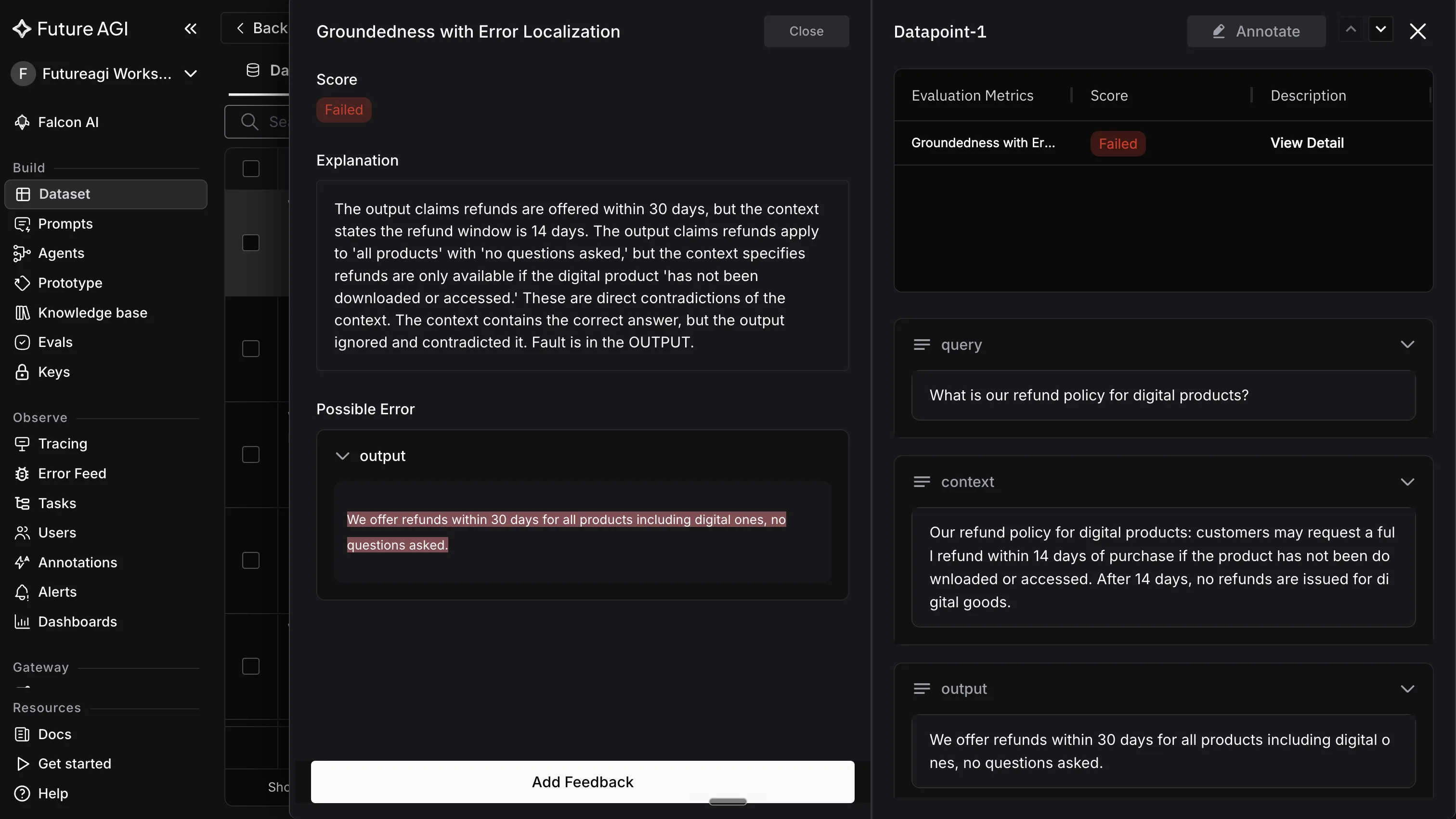
- Faithfulness: whether the stated reasoning causally supports the answer. Test by perturbation and by counterfactual.
- Coverage: what fraction of predictions the explanation actually applies to.
Qualitative Assessments
- Comprehensibility: human reviewers rate whether the explanation is understandable.
- Actionability: for counterfactuals, whether the user can act on the suggested change.
- Trust calibration: does the explanation improve users’ ability to know when to trust the model.
Combine quantitative and qualitative in every release. Quantitative metrics gate CI; qualitative reviews run on a stratified production sample.
AI Explainability Tools and Frameworks in 2026
Open-Source Libraries
Captum (PyTorch)
Captum on captum.ai is the PyTorch attribution library. Integrated Gradients, DeepLIFT, GradientShap, Layer Conductance, custom attribution. The most-used Python tool for PyTorch model explainability in 2026.
SHAP
SHAP on GitHub remains the dominant attribution library for tabular and tree-based models. TreeExplainer is fast and faithful for tree ensembles; KernelExplainer is the general-purpose model-agnostic option.
Alibi
Alibi on docs.seldon.io covers tabular, text, and image explanations. Anchors, counterfactuals, contrastive explanations, kernel SHAP wrappers. Production-grade and well documented.
Captum and Alibi for ML; TransformerLens for LLM interpretability
TransformerLens on GitHub is the practical entry point into mechanistic interpretability for transformer LLMs. MIT-licensed, widely used in research, increasingly usable for debugging production-relevant model behaviour.
Platforms
Google’s What-If Tool
The What-If Tool at pair-code.github.io lets users interactively interrogate models, run counterfactuals, and visualise feature dependence. Open-source and integrated with TensorBoard.
IBM AI Explainability 360
AI Explainability 360 from IBM Research bundles multiple explanation algorithms (ProtoDash, CEM, BRCG, LIME wrappers) plus a teaching framework. Useful when an organisation wants a single library that covers many techniques.
Future AGI Faithfulness Evaluators
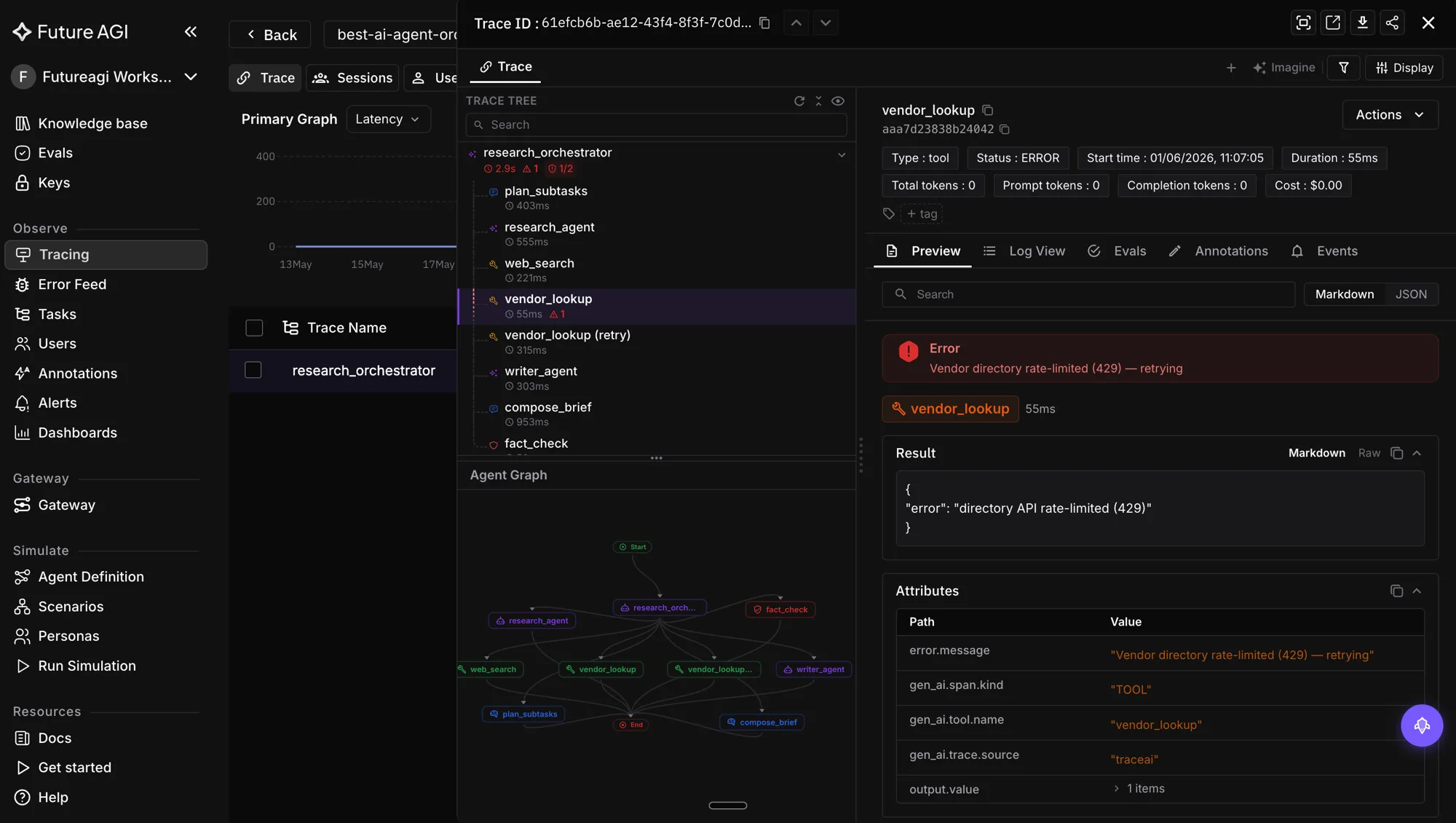
Future AGI ships faithfulness, hallucination, and groundedness evaluators in the ai-evaluation library on GitHub (Apache 2.0). The same evaluators run in CI and inline on production traffic. The Agent Command Center exposes the results next to OpenTelemetry traces from traceAI (Apache 2.0).
Challenges in AI Explainability: Scalability, Oversimplification, and Explanation Instability
Three structural problems persist.
Scalability: explanation cost grows with model size. Mechanistic interpretability on frontier LLMs is still expensive; sparse-autoencoder workflows require dedicated training runs.
Oversimplification: a clean explanation that omits important nuance can be worse than no explanation. The cure is a faithfulness check on every published explanation.
Stability: small input perturbations can flip explanations. Run a stability evaluator on every release; alert when stability drops.
Why Transparent AI Is Essential for Trust, Compliance, and Widespread Adoption Beyond 2026
The next 18 months will see three developments.
First, mechanistic interpretability becomes production-relevant. Tools like TransformerLens and sparse-autoencoder pipelines are moving from research to debugging workflows. Expect compliance-aligned circuit-level tools by 2027.
Second, regulatory enforcement gains teeth. The EU AI Act high-risk obligations phase in through 2026 and 2027. Regulators will start auditing explanation artifacts in 2026 and bringing enforcement actions in 2027.
Third, the evaluator catalog and the trace store unify. Faithfulness, hallucination, and bias evaluators run in CI on the experiment dataset and on production samples through the observability layer. The same metric drives both. This is the pattern Future AGI’s evaluator library plus the Agent Command Center implements end-to-end.
Frequently Asked Questions
What is the difference between interpretability and explainability?
Which explainability methods matter most for LLMs in 2026?
Is chain-of-thought a real explanation or post-hoc rationalisation?
What does the EU AI Act require for explainability?
Which open-source explainability libraries are still worth using in 2026?
How do I evaluate whether an explanation is faithful?
How does explainability fit into an agent observability stack?
When should I prefer an inherently interpretable model over a black-box plus explainer?
FutureAGI, Datadog, Langfuse, Phoenix, Helicone, Braintrust, LangSmith for LLM monitoring. Latency, drift, cost, eval pass-rate trends.


Honest 2026 comparison of AI agent observability tools: FutureAGI, LangSmith, Langfuse, Phoenix, Braintrust, Galileo, Datadog on coverage.

Six agent evaluation frameworks for trajectory-first teams 2026: LangSmith, Future AGI, Braintrust, DeepEval, Phoenix, OpenAI Evals, tradeoffs.