Best LLM Agent Memory Tools in 2026: 6 Honest Picks Across Three Camps
Mem0, Zep, Letta, LangMem, MotorHead, and Postgres+pgvector for LLM agent memory in 2026. Honest tradeoffs on recall, freshness, and contradictions.
Table of Contents
A user updates their shipping address in March. By August, the agent quotes the old one because the original write still has higher embedding similarity. Recall is technically correct. The package goes to the wrong street. The postmortem reads “memory worked.” That’s the failure mode hiding inside most 2024-era agent stacks: memory chosen by demo, evaluated by recall alone, owned by nobody when it breaks at 2am.
The 2026 memory category splits cleanly into three camps. Persistence-first (Mem0, Zep) hands you a write/recall API and asks you to trust their store. Structure-first (Letta, the MemGPT successor) gives you typed memory blocks the agent can self-edit. Orchestrator-coupled (LangMem) ties memory to the framework’s checkpointing model. Below those, MotorHead is the lightweight Redis buffer, and a custom Postgres+pgvector stack is the DIY baseline that ships when none of the managed shapes match your retention policy. The right pick depends on who you want owning state: your code, your DB, or the framework. Pick wrong and the lock-in shows up six months later, when you’re rewriting integrations during a compliance review.
TL;DR: best agent memory tool per camp
| Camp | Best pick | Why (one phrase) | Pricing | License |
|---|---|---|---|---|
| Persistence-first (semantic) | Mem0 | ADD-only fact memory, strong dev ergonomics | OSS free; cloud paid | Apache 2.0 |
| Persistence-first (temporal) | Zep | Bi-temporal modeling, entity graph, session history | Flex $125/mo, Flex Plus $375/mo | Proprietary; legacy CE deprecated |
| Structure-first | Letta | Typed memory blocks, MemGPT successor | Free OSS; Letta Cloud | Apache 2.0 |
| Orchestrator-coupled | LangMem | Native LangGraph store integration | Free OSS | MIT |
| Lightweight chat buffer | MotorHead | Redis-backed, server in a box | Free OSS | Apache 2.0 |
| DIY baseline | Postgres + pgvector | Your schema, your retention, your retrieval | Free OSS | PostgreSQL |
If you only read one row: pick Mem0 if you want fact memory in your codebase. Pick Zep if freshness and contradiction handling are the failure modes you’ve already shipped. Pick Letta if you want the agent to manage its own memory blocks. The other three are situational.
What an agent memory tool actually needs
Memory isn’t a feature you bolt onto an agent. It’s the database the agent talks to between turns, and the same database properties matter: write API, recall API, lifecycle, observability, scope. Pick a tool that covers all six surfaces below. If a candidate is missing one, plan for the gap before you ship, or expect to write it yourself in production.
- Write API. A clean way to store a fact, preference, entity, or session record. Without this, the team drifts to ad-hoc rows in Postgres and the memory shape grows fractal.
- Recall API. Semantic similarity, entity lookup, time-windowed queries. The retrieval shape is what the agent can ask for; everything else is glue.
- Lifecycle. Updates, deduplication, retractions, TTLs, scope ends. The dimension teams skip longest. Test it with a 1,000-interaction soak before standardizing.
- Memory types. Semantic (facts), episodic (past sessions), entity (relationships), procedural (learned workflows). Verify which types the tool supports natively against your workload.
- Backend flexibility. Pluggable vector store (Pinecone, Qdrant, Weaviate, pgvector). Pluggable graph store when entity memory matters. Avoid tools that lock you to one backend in 2026.
- Trace integration. Every memory operation emits a span. Without span data, debugging a freshness miss or a cross-tenant leak is guesswork.
The four-dimension eval framework (recall, freshness, contradiction handling, forgetting) sits on top of these six surfaces. Score them independently or you’ll keep shipping the “memory worked, package went to wrong address” failure. The detailed rubrics live in our companion post on evaluating agent memory systems; this post is the vendor map underneath them.
Memory coverage across the 2026 picks
| Tool | License | Memory types covered | Freshness primitive |
|---|---|---|---|
| Mem0 | Apache 2.0 | Semantic, episodic | Per-fact timestamps, configurable TTLs |
| Zep Cloud | Proprietary | Semantic, episodic, entity | Bi-temporal (valid-at + recorded-at) |
| Letta | Apache 2.0 | Semantic, episodic, procedural | Agent-authored via memory block edits |
| LangMem | MIT | Semantic, episodic | LangGraph store metadata |
| MotorHead | Apache 2.0 | Session buffer (episodic) | Manual; LLM-summarized rolling window |
| Postgres + pgvector | PostgreSQL | Whatever you model | Whatever you build |
The six picks compared
1. Mem0: persistence-first, semantic, most popular
Apache 2.0 OSS. Hosted Mem0 cloud with free dev tier and paid production tiers.
Use case: Agents whose primary need is fact memory: user preferences, profile attributes, learned facts that show up across sessions. Mem0’s API is one line to add a memory and one line to retrieve. The ADD-only fact extraction pulls structured facts from raw conversations and stores them with timestamps, which makes recall feel like asking a database rather than searching a transcript.
Architecture: Python and TypeScript SDKs. Pluggable vector store (Qdrant, Pinecone, Weaviate, Chroma, pgvector). Pluggable LLM and embedding model. The current README highlights an ADD-only memory algorithm where extracted facts accumulate over time, with entity linking and hybrid retrieval; verify forgetting and consolidation behavior against the latest docs before relying on it.
Best for: Engineering teams that want to add semantic memory to an existing agent without operating a separate memory service. Strong fit for chat assistants, support agents, and copilots where user preference recall matters and the team is comfortable owning the eval surface.
Honest tradeoffs: Memory-as-flat-facts is simpler than entity-graph memory; complex relationship queries need a different tool. The ADD-only default means staleness accumulates unless you wire explicit TTLs and supersede logic, and a freshness rubric will surface this fast. The hosted service is newer than the OSS path; verify retention and data-handling before signing.
Camp: Persistence-first. State lives in Mem0’s store; your code calls add/search.
2. Zep: persistence-first, bi-temporal, the freshness pick
Proprietary managed product at Zep Cloud. Legacy Apache-2.0 Community Edition deprecated under a legacy/ path. Current OSS surface is examples, integrations, and Graphiti for the standalone temporal-graph piece.
Use case: Production agents that need three memory surfaces in one platform (session history, semantic memory, and an entity graph extracted from conversations) and where freshness or contradiction handling have already shown up in a postmortem. Zep’s bi-temporal modeling puts valid_at and recorded_at on every graph edge, which is the strongest out-of-the-box answer in the category to “did the agent use the LATEST fact.” If your retention policy mentions point-in-time recall, this is the default to beat.
Architecture: Managed multi-tenant service. The entity graph is built by LLM-extracted entities and relationships, layered with bi-temporal edges. Session history sits alongside the graph; semantic memory uses both as ranking signals. The deprecated Community Edition is still in the repo under legacy/; new deployments should target the managed product.
Best for: Teams that want one managed memory platform across short-term, long-term, and entity graph, and who can live with a managed-only operational shape. Strong fit for customer support agents, healthcare-adjacent assistants, and CRM-flavored workflows where the cost of a stale fact is higher than the cost of a managed bill.
Honest tradeoffs: No supported self-host path today; managed-only operation may not fit teams with strict data-residency or air-gap requirements. Pricing is credit-based and harder to model than per-call APIs. Plan migrations off the deprecated Community Edition before security updates stop landing. Bi-temporal modeling is powerful but adds query complexity; a small team without a memory-eval rubric won’t see the benefit.
Camp: Persistence-first. State lives in Zep’s store; your code calls a managed API.
3. Letta: structure-first, the MemGPT successor
Apache 2.0 OSS at letta-ai/letta. Hosted Letta Cloud with paid tiers. The original cpacker/MemGPT GitHub repo now redirects here; treat MemGPT as historical context, not a separate live framework.
Use case: Production agents where memory needs explicit tiers and the agent itself manages what’s in each tier. Letta is the productized successor to the MemGPT paper, which framed the LLM context window as a virtual memory hierarchy. Each agent has a typed memory state (persona block, human block, archival memory, recall memory) and the agent uses tool calls to page facts between tiers. If you want the agent (not your retrieval rules) deciding what stays in core context, Letta is the pick.
Architecture: Python server with REST API. Server-first deployment, not a library. Pluggable storage (sqlite default; Postgres for production). The server mediates tool calls, memory edits, and tier paging, which makes the trace surface different from library-first memory tools: every memory operation is a server call you can observe directly.
Best for: Engineering teams that want a server-first memory model with explicit tiers, and that are comfortable with the agent managing its own memory blocks via self-edits. Strong fit for long-running assistants, persistent companions, and workflows where memory tier discipline (what’s core, what’s archival) matters more than raw fact volume.
Honest tradeoffs: Server-first deployment is more involved than Mem0’s library shape; you operate the Letta server alongside your agent. The MemGPT-paper abstractions (persona, human, archival) take a session to internalize and have opinions about how agents should be structured. Self-editing memory moves contradiction handling into agent-authored policy, which needs a stricter eval rubric than a system with hard-coded resolution rules. Some teams prefer the LLM-to-tool flow that doesn’t route through a memory server.
Camp: Structure-first. State lives in typed blocks the agent edits via tool calls.
4. LangMem: orchestrator-coupled, LangGraph-native
MIT-licensed at langchain-ai/langmem. Part of the LangChain ecosystem; free OSS.
Use case: Teams already on LangGraph who want memory primitives that integrate with the framework’s checkpointing model rather than fighting it. LangMem provides reflection, memory store, and consolidation primitives that plug directly into LangGraph state, so memory reads and writes happen inside the same execution graph as the rest of the agent. Outside LangGraph, the value drops sharply.
Architecture: Python library with native LangGraph store integration. Reflection and summarization run via LLM-powered helpers. Consolidation happens via background tasks where supported by the storage backend. Memory is scoped through the same primitives LangGraph uses for thread state and checkpointing, which keeps the mental model coherent if you’re already in the LangChain world.
Best for: LangGraph teams that want memory in the same ecosystem as their agent runtime. Strong fit when the orchestration layer is the source of truth for agent state and you’d rather extend it than introduce a second system.
Honest tradeoffs: Outside LangChain or LangGraph, the library has less value; the integration is the point. The memory abstraction is shallower than Letta’s typed blocks or Zep’s entity graph; deep memory needs usually pair LangMem with another tool. Lock-in to the LangGraph orchestrator is the explicit tradeoff; if you ever migrate orchestrators, memory migrates with you.
Camp: Orchestrator-coupled. State lives in the framework’s store; your code talks to LangGraph.
5. MotorHead: lightweight Redis buffer
Apache 2.0 OSS at getmetal/motorhead. Originally maintained by Metal; community-maintained today. Free OSS.
Use case: Agents that need a chat-shaped memory buffer with summarization and don’t want to operate a vector store yet. MotorHead is a Rust server backed by Redis that exposes a simple HTTP API: append messages to a session, retrieve the recent buffer plus an LLM-generated summary of older context. It’s the simplest production-shaped memory in this list, closer to “chat session in a box” than to a full memory platform.
Architecture: Single Rust binary plus Redis. HTTP API for session append, retrieval, and summary. The summarizer trims the message buffer above a configurable threshold and stores a rolling summary alongside the recent messages. No native entity extraction, no bi-temporal modeling, no typed memory blocks.
Best for: Teams that want a known-good chat memory primitive without picking a vector store, a graph store, or a framework. Strong fit for support agents, internal copilots, and assistants where session continuity is the main job and cross-session fact recall is secondary.
Honest tradeoffs: Redis is the only supported backing store; if your ops team doesn’t operate Redis, that’s a new dependency. No semantic recall across sessions; the buffer is the buffer plus a summary. Maintenance cadence is slower than the persistence-first or structure-first tools; verify the latest commit before standardizing. Best treated as a starting point you’ll outgrow rather than a long-term platform.
Camp: Persistence-first, minimalist. State lives in Redis; your code talks to a small HTTP server.
6. Postgres + pgvector: the DIY baseline
PostgreSQL-licensed. Free OSS; cost is your managed Postgres bill (RDS, Cloud SQL, Neon, Supabase).
Use case: Teams that already operate Postgres at production scale, have a clear retention or compliance policy that none of the managed tools match cleanly, and would rather own the memory schema than inherit somebody else’s. A facts table with (user_id, key, value, valid_at, recorded_at, source, tombstone_at) plus a pgvector index over fact embeddings will outperform a misconfigured managed tool, and your DBA can reason about it.
Architecture: Postgres with the pgvector extension (or pg_embedding if you prefer). Embeddings on a normalized facts table. Recall is a SQL query with an ORDER BY on cosine distance, optionally filtered by user, scope, and validity window. Updates and tombstones are explicit columns the recall query honors. Consolidation is a scheduled job. The entire surface lives in code you own.
Best for: Regulated industries where retention policy is the design constraint, teams with strong Postgres ops, and stacks where adding another managed service costs more political capital than writing 200 lines of SQL. Strong fit when memory has to participate in transactions alongside other application state.
Honest tradeoffs: You write the consolidation logic, the freshness rules, the contradiction policy, and the forgetting flow. None of it ships out of the box. The dev velocity is lower than Mem0 for the first three months; the velocity catches up around the time the first managed tool would hit its retention-policy wall. The eval surface is the same as everywhere else (recall, freshness, contradiction, forgetting), but you wire it directly to the SQL.
Camp: Custom. State lives in your DB; your code is the memory tool.
The three-camp decision framework
Pick by who’s owning state when something breaks at 2am.
- Your code (DIY). Postgres + pgvector. Highest engineering cost up front; lowest lock-in; strongest fit for regulated retention and air-gap requirements.
- Your DB, managed by a vendor (persistence-first). Mem0 for fact memory with strong dev ergonomics, Zep for bi-temporal modeling and entity graphs, MotorHead for a minimal Redis-backed buffer. Lowest engineering cost; highest dependency on the vendor’s retention defaults.
- The framework (structure-first / orchestrator-coupled). Letta if you want the agent to manage typed memory blocks itself, LangMem if you’re already on LangGraph and want memory inside the orchestrator. Lock-in is the framework, not the storage.
A common pattern that works: start with Mem0 or Zep to get to a working agent fast, run the four-dimension eval for two weeks, and either keep the managed tool or migrate to a custom Postgres schema once the failure modes are clear. The migration cost is real but bounded; the migration cost of discovering retention requirements after a compliance audit is not.
Common mistakes when picking an agent memory tool
- Treating memory as RAG over chat history. Pure semantic search over the conversation transcript misses entity relationships, time, and consolidation. The 2026 tools handle these natively; you should benefit from that rather than reinventing them.
- Skipping consolidation in the demo. Memory that grows without bound degrades retrieval. Run a 1,000-interaction soak before standardizing. Pretty demo, ugly week 4.
- Picking on demo recall alone. Demos use idealized facts and idealized queries. Score recall, freshness, contradiction handling, and forgetting independently. The failure modes that ship live in the last three.
- Pricing only the platform fee. Real cost is platform fee plus vector store cost plus embedding cost plus engineering hours. Project 90 days.
- Underestimating retrieval latency. Memory retrieval adds latency to every agent turn. Budget the p95 at production volume; some managed tools are noticeably slower than a pgvector query against a local Postgres.
- Skipping trace integration. A memory miss without span data is invisible. Wire writes and reads as OTel spans before the first production incident, not after.
- Conflating “memory” with the framework’s checkpoint store. LangGraph state and LangMem store are different layers; treat them separately or you’ll find session state in places it shouldn’t be.
How Future AGI fits the picture
Future AGI is not a memory product. Mem0, Zep, Letta, LangMem, MotorHead, and your custom Postgres schema are. Where Future AGI fits is the layer above: the eval and observability surface that scores whether your chosen memory is doing its job under production load. The ai-evaluation SDK ships Groundedness, ContextRelevance, and ChunkAttribution for recall, FactualAccuracy and a MemoryFreshness CustomLLMJudge for freshness, ContradictionResolution for conflicts, and ForgettingCompliance plus AnswerRefusal for retractions and cross-tenant probes. The traceAI library wires every memory operation as a RETRIEVER or TOOL span with memory.system, memory.scope, and memory.operation attributes, so the same rubric that gates CI attaches to live traces via EvalTag at zero inline latency. None of that replaces Mem0 or Zep; it tells you which one is actually working for your domain.
Recent agent memory updates
| Date | Event | Why it matters |
|---|---|---|
| 2023 | MemGPT paper published (arXiv 2310.08560) | Canonical hierarchical-memory abstraction entered public discourse. |
| 2024 | MemGPT became Letta | Academic project productized into a server-first platform. |
| 2024-2025 | Mem0 grew rapidly | Lightweight semantic memory accumulated meaningful community adoption; verify current release on the repo. |
| 2025 | Zep deprecated Community Edition | Self-hosted CE moved to legacy; managed Zep Cloud became the supported path. |
| 2025-2026 | Bi-temporal modeling shipped in Zep + Graphiti | Freshness became a first-class default rather than an eval afterthought. |
| 2026 | LangMem stable inside LangChain ecosystem | Orchestrator-coupled memory matured for LangGraph-first teams. |
How to actually evaluate this for production
-
Define a labeled dataset. Multi-session agent interactions where memory matters: user preferences, factual recall, multi-turn reasoning, entity tracking, deliberate updates, deliberate retractions, cross-tenant probes. Hand-label expected memory behavior per turn.
-
Run candidate tools with the same upstream LLM. Hold prompts, tools, and the test dataset constant. Measure recall@k, freshness pass rate, contradiction-resolution pass rate, forgetting pass rate, p95 retrieval latency, and cost per memory operation.
-
Test consolidation under load. Run the agent for 1,000+ interactions. Measure how memory size grows, how recall degrades with volume, how consolidation handles staleness and duplicates.
-
Wire to a trace surface. Every memory operation should emit a span with
memory.system,memory.scope,memory.operation. Future AGI’s traceAI is one path; Phoenix or self-hosted Langfuse are others. The trace is what makes the difference between “memory broke” and “the consolidation pass on the 2026-04 Mem0 build stopped marking supersedes on address updates.” -
Cost-adjust at production volume. Real cost equals platform fee plus vector store cost plus embedding cost plus engineering hours. Project 90 days. Re-run the same numbers against your DIY Postgres baseline before signing the managed contract.
The detailed scoring rubrics, span schemas, and adversarial-set construction live in our evaluating agent memory systems post. This one is the vendor map underneath them.
Sources
- Mem0 GitHub · Mem0 pricing
- Letta GitHub · Letta site
- Zep GitHub · Zep Cloud pricing · Graphiti
- LangMem GitHub · LangGraph store docs
- MotorHead GitHub
- pgvector
- MemGPT paper (arXiv 2310.08560)
Related reading
Frequently Asked Questions
What is LLM agent memory and why does it matter?
Which agent memory tool is best in 2026?
Are agent memory tools open source?
How do these tools differ on freshness and contradiction handling?
How do I evaluate an agent memory tool for production?
How do agent memory pricing models compare?
How do I observe agent memory operations in production?
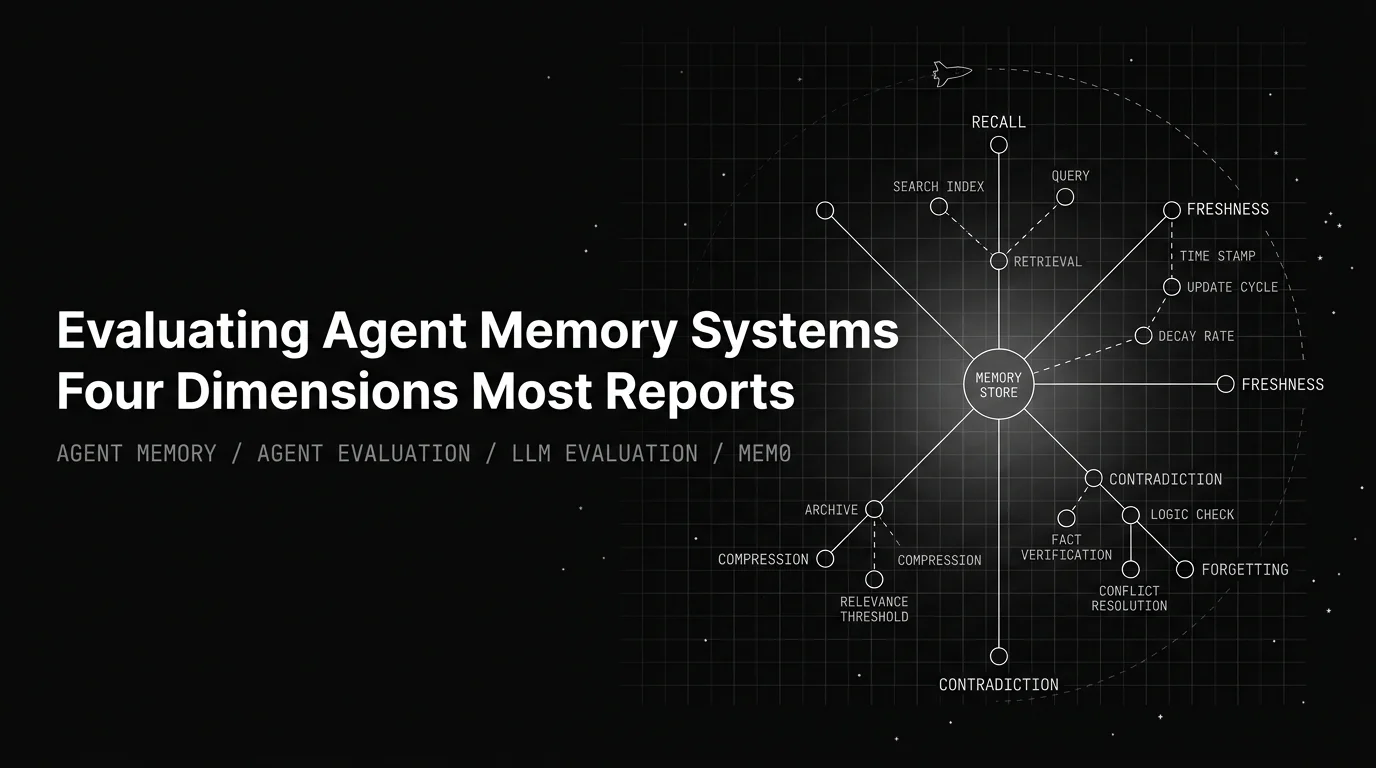
Evaluating agent memory is four problems, not one: recall, freshness, contradiction handling, forgetting. A 2026 framework for Mem0, Zep, Letta, LangMem.

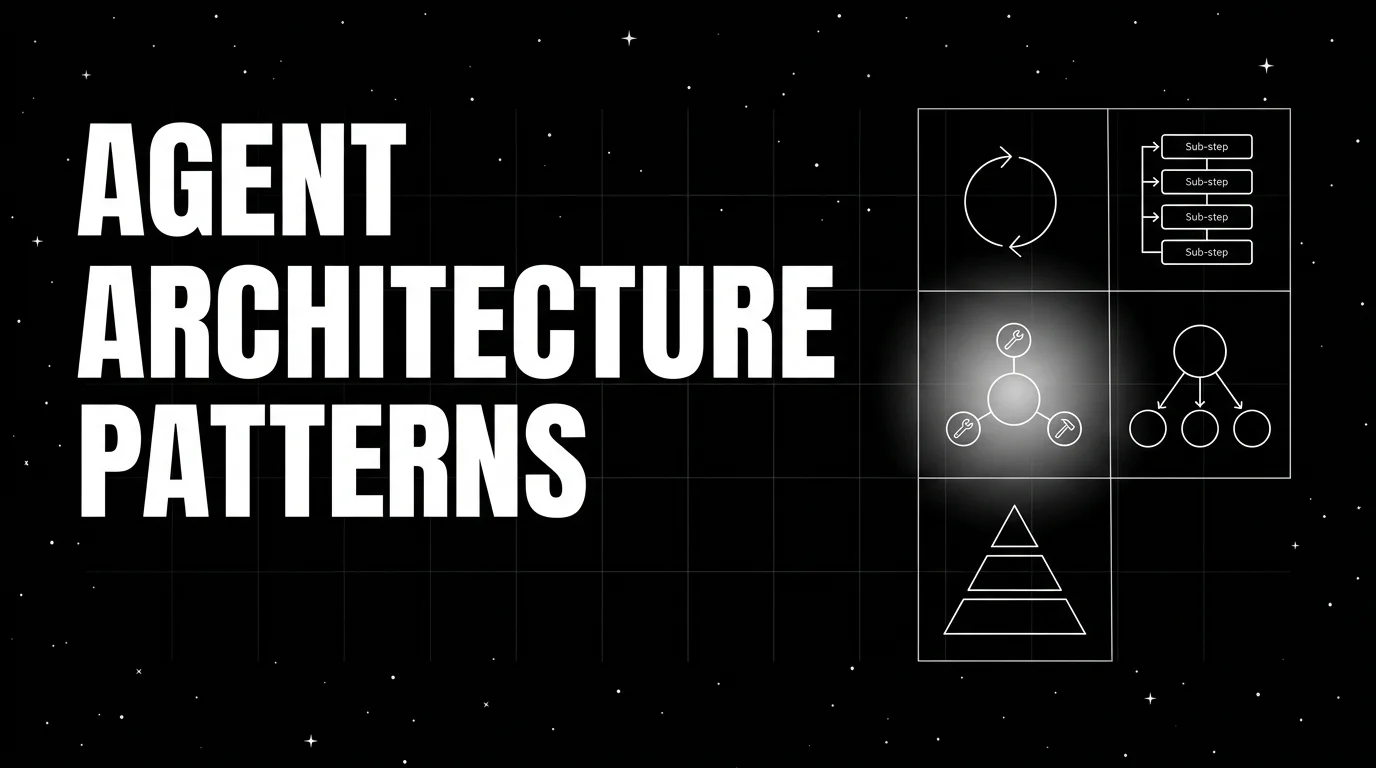
Five agent architecture patterns in 2026: ReAct, plan-then-execute, supervisor and workers, graph, event-driven. Four-axis tradeoff per pattern.

LangGraph, CrewAI, Microsoft Agent Framework, AutoGen, Mastra, OpenAI Agents SDK, and Google ADK ranked for 2026 by debug, eval, and production readiness.