Feb 2, 2026
Share:
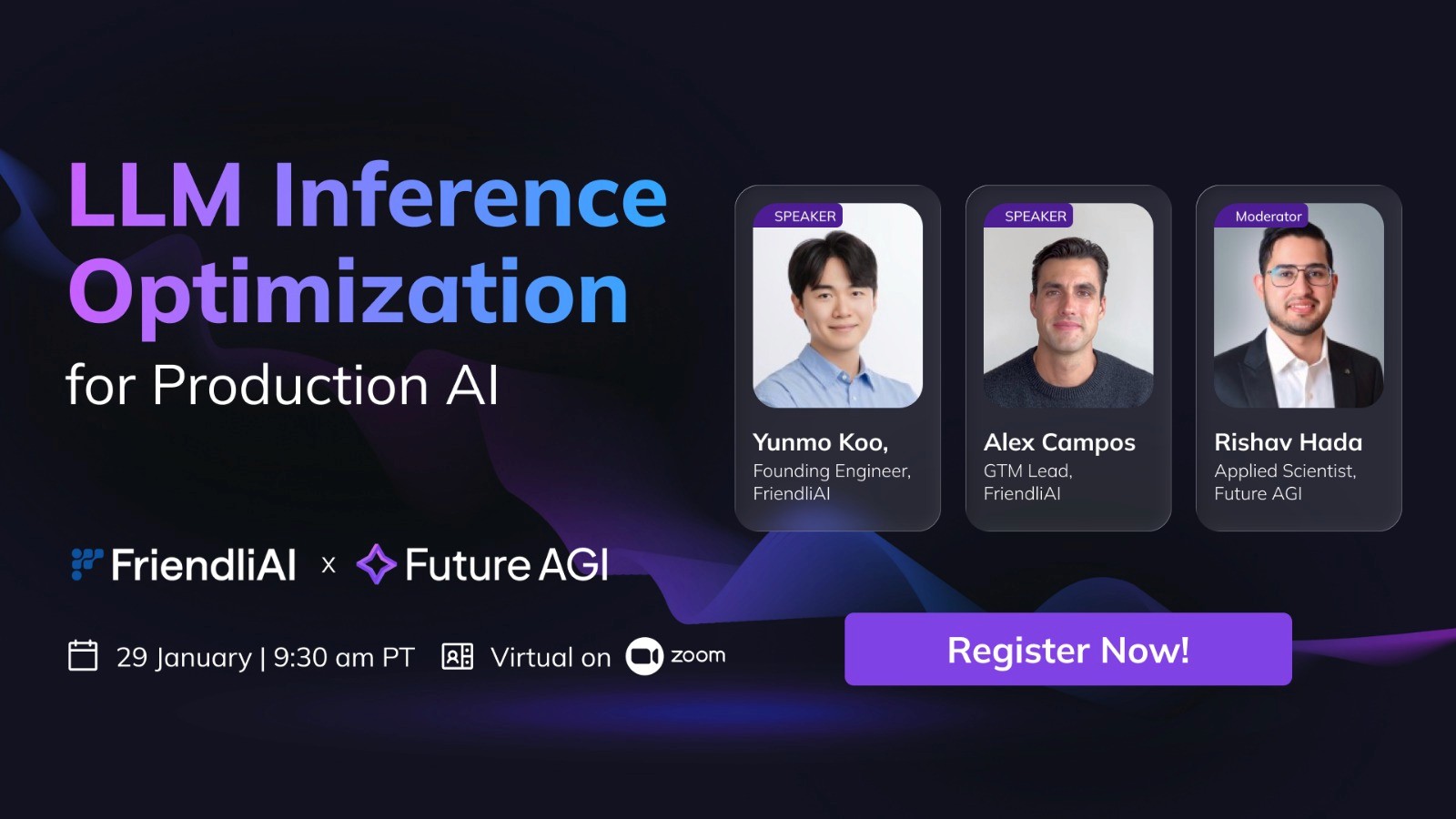
Inference optimization separates production AI systems from proof-of-concepts, but most teams overlook it until costs spiral.
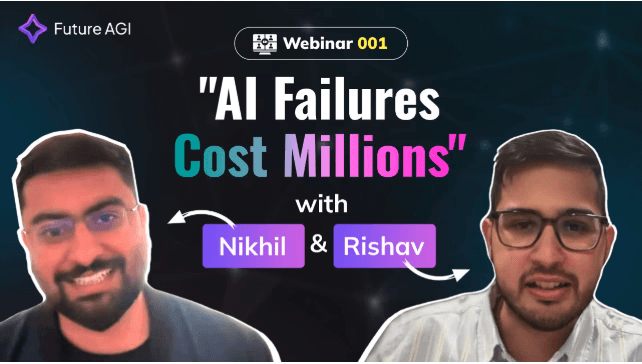
About the Webinar
As generative AI moves into production, the bottleneck shifts from training to serving. With 80-90% of GPU resources consumed during inference, the performance of your serving infrastructure directly determines your competitive position, affecting everything from user experience to unit economics.
This session demystifies LLM inference optimization through FriendliAI's proven approach. You'll explore the architectural decisions and deployment strategies that enable sub-second response times at scale, and understand why inference performance isn't just an engineering concern, it's a business imperative.
This isn't about squeezing marginal gains from existing infrastructure. It's about architecting inference pipelines that scale efficiently from day one.
👉 Who Should Watch
ML/AI Engineers, MLOps Practitioners, and Technical Teams deploying generative AI applications in production who need to balance response speed, infrastructure costs, and system reliability.
🎯 Why You Should Watch
Grasp why inference optimization becomes critical as AI systems move from prototype to production
Explore techniques like continuous batching, speculative decoding, and intelligent caching that reduce serving costs by up to 90%
Understand the FriendliAI infrastructure approach: from custom GPU kernels to flexible deployment models
Examine real customer deployments and the measurable impact on latency, throughput, and cost
Walk away with actionable deployment strategies for high-performance LLM serving at scale
Gain clarity on turning inference efficiency into measurable competitive differentiation
💡 Key Insight
Most teams optimize model accuracy but deploy on generic serving infrastructure. Production-grade AI systems require purpose-built inference engines that treat serving performance as a first-class design constraint, not an afterthought.
🌐 Visit Future AGI